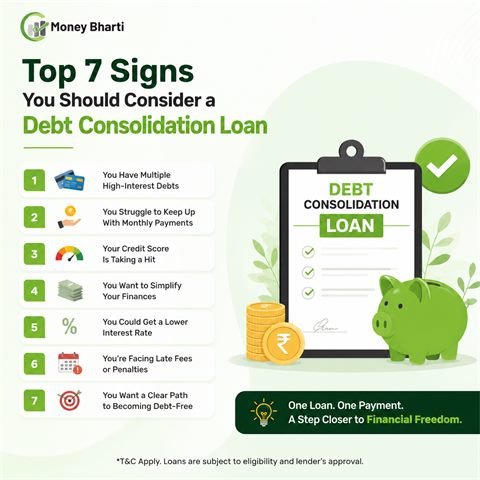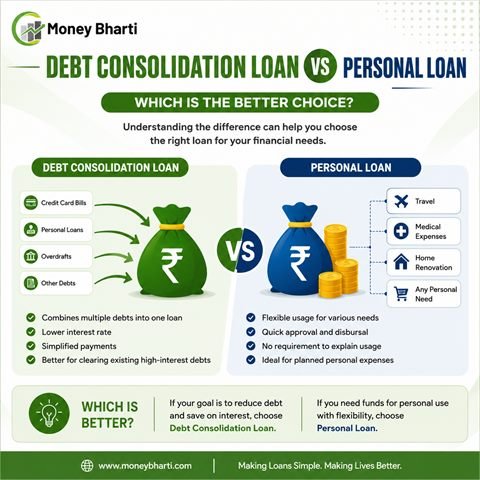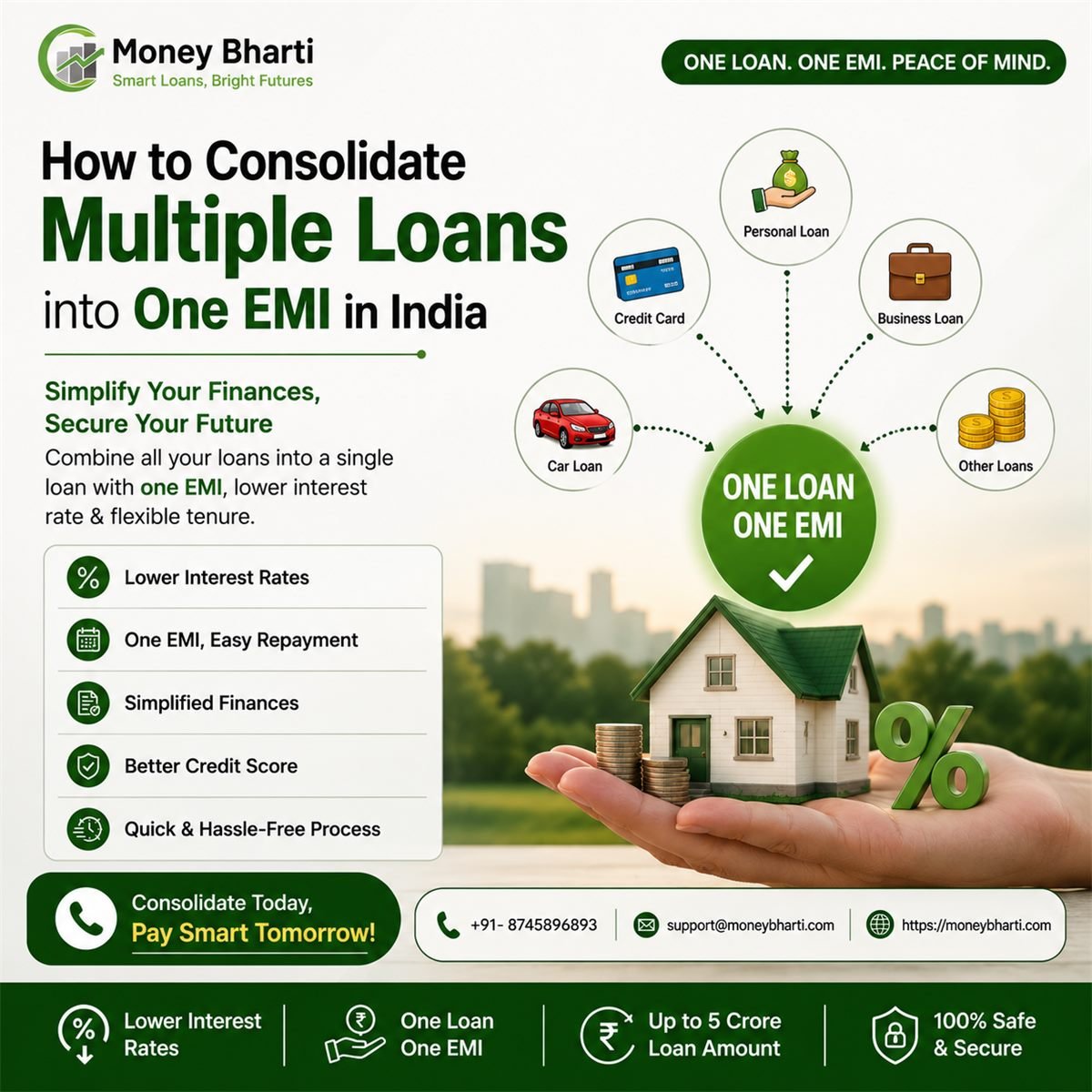
Scratching a credit card is much easier than borrowing a loan. For this reason, people keep multiple credit cards. The primary objective of credit cards is to provide instant cash, especially when it is needed most. If you repay the entire amount within the billing cycle, you can save interest. If you don’t, you will pay a high interest on the unpaid amount. It is called debt, for which you may require a credit card debt consolidation loan.
Let’s learn more about debt consolidation and how it helps in paying off debt.
What is Debt Consolidation?
It is the process of merging multiple debts, especially credit card dues, into a single, low-interest loan. It is to be noted that credit card companies charge high interest on unpaid bills. A high interest rate increases total debt and makes it difficult to pay off. For this reason, debtors are offered low-interest loans to pay their debts. However, strict conditions apply for this loan. You need to have a good credit score and a stable income to be eligible for loan consolidation.
Common Debts That Can Be Consolidated:
- Personal loans
- Credit card outstanding dues
- Consumer durable loans
- Medical loans
- Multiple unsecured loans
- Payday or short-term loans
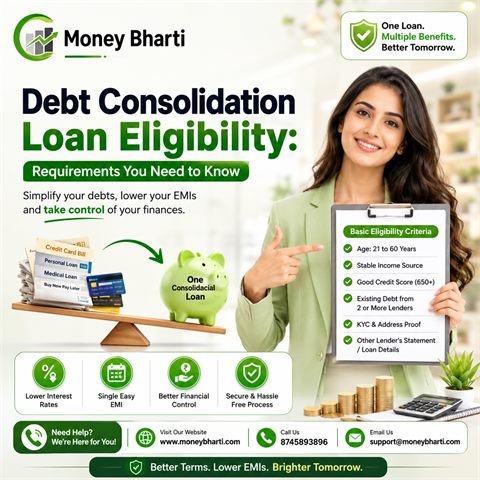
Viewers are advised to check their debt consolidation loan eligibility before applying for a loan. Though strict conditions apply for borrowers, you can still remain hopeful of receiving a low-interest loan. If you meet the following criteria, you may qualify for debt consolidation.
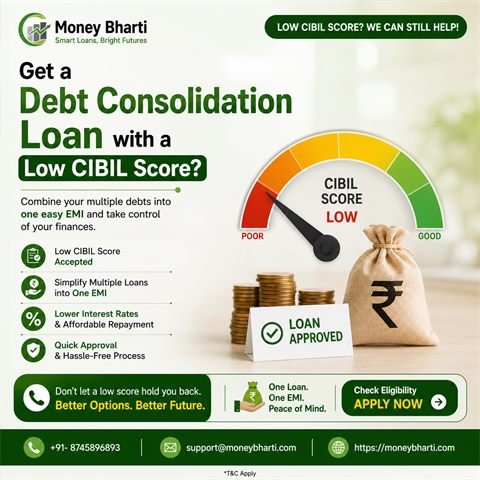
Credit Score: A CIBIL score of 700 to 750 or higher can make you eligible for debt consolidation. If you pay your credit card dues on time, you can achieve this score within a few months. Since you are in debt, your credit score may be low. Check your credit score now.
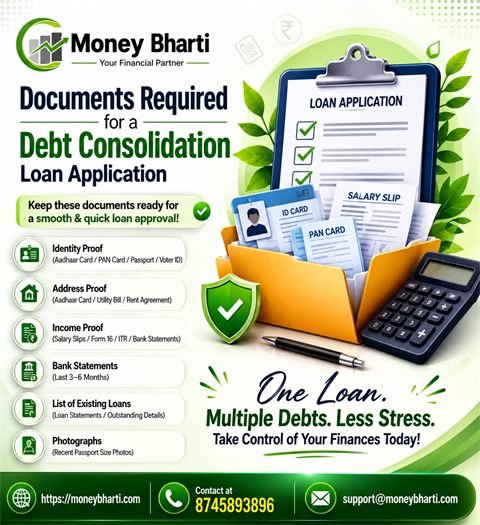
Income & Employment: You must be employed and have a stable income. If you’re self-employed, you should have documentary evidence of a stable income. If you’re a businessman, you should present your tax papers to prove you earn a stable income. Prepare your papers to apply for a loan.
Debt-to-Income Ratio: Lenders will evaluate your monthly obligations (including EMIs and credit card minimums) to ensure you can save some money to repay your new loan. If your debt-to-income ratio is high, they might decline your loan application. Contact an experienced loan advisor to learn more about the debt-to-income ratio.
Benefits of Loan Consolidation
1. Simplified Financial Management
Presently, you’re paying multiple EMIs, and they include credit card minimum dues. You pay EMIs on different dates. In other words, you need to remember various dates. If you miss a payment, you pay for it. Consolidating debt can simplify your finances. It will free you from having to remember multiple due dates.
2. Potentially Lower Interest Costs
Debt consolidation interest rates are lower than credit card interest rates. When you consolidate debt, you save money on interest. A financier will consolidate all your debts into a low-interest loan and give you a respite from burgeoning debt. Debt consolidation will trigger a chain reaction of saving money and time.
3. Lower Monthly EMI
Reducing the interest rate will reduce your EMI. Presently, high interest rates increase the overall EMI amount. If you reduce the interest, you can save a good amount on your EMI every month. You can use a debt consolidation EMI calculator to calculate your EMI. In this way, you’ll have an idea of how much you can save with debt consolidation.
4. Improved Credit Management
Consolidating loans improves credit management. The first thing is to convert your multiple EMI to single EMI loan. The second thing is to fix a time frame to pay off your debt. With every EMI, you will see a significant decrease in your debt. Soon, you will become debt-free and attain your financial freedom.
5. Improved Credit Score
It is the biggest advantage of debt consolidation. As soon as you consolidate your debt, you will see a significant jump in your credit score. Consolidating debt shows your determination to pay off your dues. You pay off your debts with a loan and repay the new loan on time.
Apply for Debt Consolidation
Step 1: Assess Your Existing Debt
Debt consolidation begins with a debt assessment. It is the first step that determines how much loan you need to pay off your dues. Sit down with a pen and paper and calculate all your dues and interest rates. Now you have a definite amount you need to become debt-free.
Step 2: Apply for Balance Transfer Loan
You can search for finance companies, especially non-banking finance companies, to apply for a loan. The good thing is that you can approach financiers online and apply for a loan. Lenders will process your loan application. They will consider your credit score, employment history, and debt-to-income ratio to form an opinion on your application.
However, involving a loan advisor is a better idea. The advantage of working with a loan advisor is that you have access to a wide range of lenders. Loan advisors maintain business relations with financiers and finance companies. For this reason, they are the first to get information on the latest interest rates and loans.
Step 3: Receive Your Loan
Once your loan application is processed, the lender will credit the promised amount into your bank account. You can pay off your debts and get ready to repay the new loan. The reduced interest rate will also reduce the EMI and the overall loan. It will improve your cash flow and credit score.
Final Thoughts
Debt consolidation for salaried employees may be easier. Self-employed and businessmen should also take advantage. Many lenders offer loans, and each lender has different requirements. You may not fulfil the requirements of the first lender, but you can try again. Here, a loan advisor can help. A loan advisor can find the right loans you qualify for and process your loan application. If you are in debt, consider consolidating your debt at earliest.