Quick Summary (30 Seconds Read)
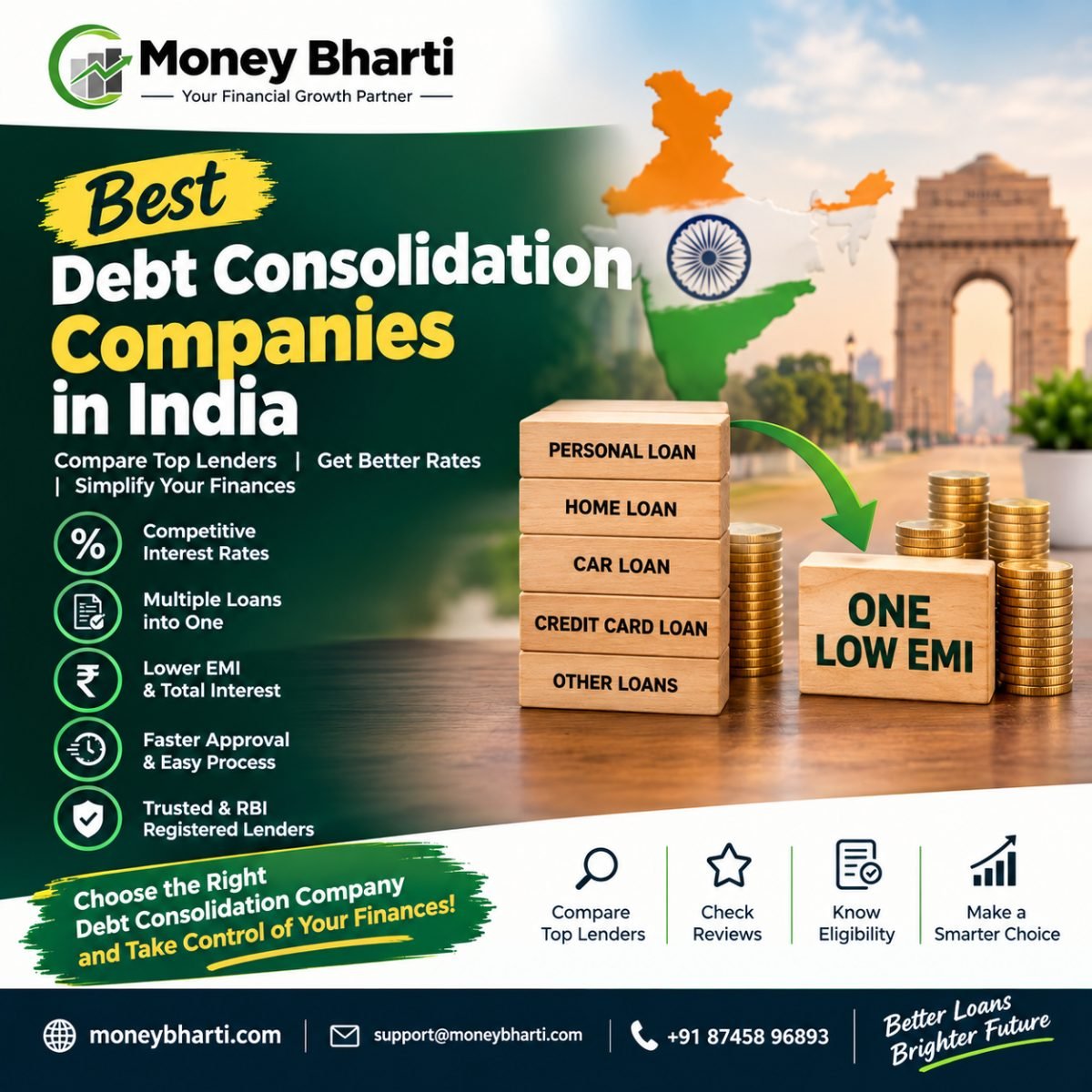
- In India, the "best debt consolidation company" is usually a bank or RBI-registered NBFC offering a personal loan, not a third-party "debt relief" agency.
- The cheapest-looking rate is not always the cheapest loan. Fees, tenure and prepayment rules change the real cost.
- In our example on ₹5 lakh, the gap between the best and worst of three offers is about ₹53,000 in total cost.
- Use a simple 100-point scorecard (below) to compare lenders objectively.
- Avoid any company that asks for an advance fee or promises to "cut your debt" without repaying it.
Problem-Based Introduction
Neha, a marketing manager in Bengaluru, finally decided to merge her credit card, BNPL and personal loan dues into one EMI. Then the real problem began: a dozen lenders, a dozen ads, and offers that all claim to be "the best." One quoted a low rate but a high fee. Another promised instant approval but hid the charges in the fine print. Choosing the wrong lender can wipe out most of what you hoped to save. This guide gives you a clear way to compare debt consolidation loan providers and pick the one that fits your profile.
Loan Overview
A debt consolidation company, in the Indian context, is a bank, NBFC or regulated digital lender that gives you a single personal loan to clear credit card and other high-interest debts. It is different from a debt settlement agency, which negotiates with your creditors to accept less than you owe and can seriously damage your credit record.
| Provider type | Examples | Typical profile |
|---|---|---|
| Public sector banks | SBI and other PSU banks | Lower rates, slower process |
| Private banks | HDFC Bank, ICICI Bank, Axis Bank | Strong for salaried, high CIBIL |
| Large NBFCs | Bajaj Finserv, Tata Capital | Faster, flexible eligibility |
| Fintech / digital lenders | App-based lenders | Quick, usually costlier |
Names are examples of provider types, not rankings. Check each lender's current terms.
Why People Need This Loan?
- Credit card interest of 36-42% p.a. makes balances hard to clear.
- Several EMIs and due dates raise the risk of missed payments.
- BNPL and instant-loan apps quietly stack up high-interest debt.
- A lower-rate loan can cut both the monthly outgo and total interest.
- Many borrowers lose the savings by choosing the wrong lender, which is why comparison matters.
Is This Loan Right For You?
- You have two or more high-interest debts totalling ₹1 lakh or more.
- A lender is offering a rate clearly below your average current rate.
- Your income is steady and the new EMI fits your budget.
- You are comfortable comparing offers and reading the sanction terms.
- You are committed to not rebuilding the card balances.
Who Should Avoid This Loan?
- Anyone who cannot afford any EMI and needs a conversation about what to do when you can't pay your EMI.
- Borrowers with only one low-rate loan.
- People with very low credit scores who will only get expensive offers.
- Anyone who plans to keep spending on the cleared cards.
- Anyone tempted by agencies that charge upfront fees to "settle" debt.
Key Benefits
- One EMI instead of many.
- Lower interest than most cards and app loans.
- A fixed payoff date.
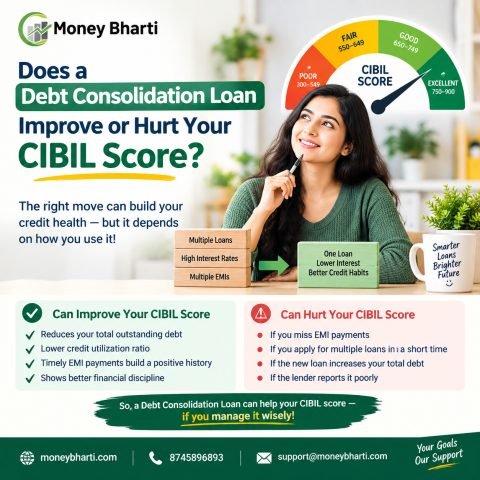
- Better credit utilisation, which can lift your score over time.
- No collateral for most personal loans.
- Competition between lenders works in your favour.
Risks You Should Know
- Fees can cancel out a small rate advantage.
- Pre-approved "instant" offers may carry hidden bundled products.
- A long tenure raises total interest even when the EMI looks small.
- Many applications in a short time can hurt your score.
- Unregistered or fraudulent lenders can misuse your documents.
Loan Eligibility
| Criteria | Typical Requirement |
|---|---|
| Age | 21-60 years (salaried), up to ~65 (self-employed) |
| Net income | ₹25,000+ per month (varies by city and lender) |
| CIBIL score | 700+ for best rates; 650+ at some NBFCs |
| Work experience | 1-2 years total, 6+ months with current employer |
| FOIR | Total EMIs under ~50-55% of income |
| Self-employed | 2-3 years of business and ITRs |
Run your numbers against the debt consolidation loan eligibility criteria before applying anywhere.
Required Documents
- PAN and Aadhaar (KYC)
- Address proof: utility bill, rent agreement or passport
- Salaried: last 3 salary slips, 6 months' bank statement, Form 16
- Self-employed: 2 years' ITR, GST returns, 12 months' bank statement
- Statements for the cards and loans you want to clear
- Passport-size photographs
Interest Rates
Offers depend on your score, income, employer and the lender. Indicative bands:
- CIBIL 780+: ~10.5-13%
- CIBIL 720-779: ~12-16%
- CIBIL 680-719: ~15-20%
- Below 680: 20%+ or limited options
For current ranges, see our debt consolidation interest rates page.
Bank/NBFC Wise Interest Rate Comparison
Indicative starting ranges for provider types; individual offers vary.
| Provider type | Indicative rate (p.a.) | Processing fee | Best for |
|---|---|---|---|
| Public sector banks | ~10.5-15% | ~0.5-1.5% | Low cost, patient borrowers |
| Private banks | ~10.5-18% | ~1-2.5% | Salaried, high CIBIL |
| Large NBFCs | ~11-24% | ~1-3% | Speed, flexible profiles |
| Fintech lenders | ~12-30% | ~2-5% | Urgent, small tickets |
See our bank-wise personal loan interest rates for a lender-by-lender view, and our pages on the HDFC Bank debt consolidation loan and the SBI debt consolidation loan.
Processing Fees & Hidden Charges
- Processing fee: 0.5-5% of the loan plus 18% GST
- Foreclosure or part-prepayment: nil to about 4% of outstanding principal
- Late payment: typically around 2% per month on overdue amounts
- EMI bounce: a fixed fee per failed debit
- Bundled insurance or add-ons: ask whether they are optional
- Documentation and stamp charges: confirm upfront
Our processing fee and charges guide explains what to expect and what to question.
EMI Calculation with Real Example
Illustrative figures using the standard EMI formula. Neha has ₹5,00,000 of debt at a blended ~28% p.a., repayable over 36 months, which costs her ₹20,685 a month.
Three offers for ₹5,00,000 over 36 months:
| Offer A (bank) | Offer B (NBFC) | Offer C (fintech) | |
|---|---|---|---|
| Rate | 12% | 14% | 17% |
| Processing fee + GST | 1.5% + GST (₹8,850) | 2% + GST (₹11,800) | 3% + GST (₹17,700) |
| EMI | ₹16,607 | ₹17,090 | ₹17,827 |
| Total interest | ₹97,852 | ₹1,15,240 | ₹1,41,772 |
| Total cost (interest + fee) | ₹1,06,702 | ₹1,27,040 | ₹1,59,472 |
Formula: EMI = P × r × (1+r)^n / ((1+r)^n − 1), where r = annual rate ÷ 12 ÷ 100.
Test your own offers in the debt consolidation EMI calculator.
EMI Comparison (Before vs After)
| Before | After (Offer A) | |
|---|---|---|
| Number of EMIs | 3 | 1 |
| Monthly outgo | ₹20,685 | ₹16,607 |
| Total repayment (36 months) | ₹7,44,660 | ₹5,97,852 |
| Total interest | ₹2,44,660 | ₹97,852 |
Monthly & Total Savings Example
| Offer | Monthly saving | Net saving over 36 months (after fee) |
|---|---|---|
| A (bank, 12%) | ₹4,078 | ~₹1,37,958 |
| B (NBFC, 14%) | ₹3,595 | ~₹1,17,620 |
| C (fintech, 17%) | ₹2,858 | ~₹85,188 |
Choosing Offer A over Offer C keeps roughly ₹52,800 more in Neha's pocket. Whichever lender you choose, the saving only holds if you stop adding new card debt.
Loan Amount & Tenure Options
On ₹5,00,000 at 12% p.a.
| Tenure | EMI | Total repayment |
|---|---|---|
| 24 months | ~₹23,538 | ~₹5,64,900 |
| 36 months | ~₹16,607 | ~₹5,97,852 |
| 48 months | ~₹13,168 | ~₹6,32,064 |
| 60 months | ~₹11,122 | ~₹6,67,320 |
Choose the shortest tenure whose EMI you can pay without strain. A lender that lets you prepay without a penalty gives you a safety valve.
Step-by-Step Application Process
- List your debts with amounts, rates, EMIs and foreclosure charges.
- Check your CIBIL score and correct any errors.
- Shortlist 3 lenders using the scorecard below.
- Ask for the Key Fact Statement (KFS) for each offer.
- Compare total cost, not just the rate.
- Apply to your best one or two choices, not ten.
- Complete e-KYC and the e-mandate on the lender's official channel.
- Pay off the old debts immediately and keep proof.
- Collect No Dues Certificates and confirm closures on your credit report.
- Set up auto-debit for the new EMI.
Processing Time & Disbursement Timeline
| Lender type | Approval | Disbursal |
|---|---|---|
| Fintech | Minutes to hours | Same day to 2 days |
| NBFC | 1-2 days | 2-3 days |
| Private bank | 1-3 days | 2-4 days |
| Public bank | 3-7 days | 5-10 days |
Real Customer Case Study
Illustrative case; names and figures are representative, not a specific customer.
Neha Verma, 31, marketing manager, Bengaluru. Net salary ₹1,10,000. She owed ₹5 lakh across a credit card, a BNPL account and a personal loan, paying ₹20,685 a month. A fintech app offered instant approval at 17% with a 3% fee. She compared it against a bank and an NBFC using the KFS, and the bank's 12% offer with a lower fee came out about ₹52,800 cheaper over three years. It took four days instead of four hours, but she cleared all three debts and now pays ₹16,607 a month.
Customer Persona Example
| Attribute | Profile |
|---|---|
| Name | Neha, 31 |
| Location | Bengaluru |
| Occupation | Salaried, marketing manager |
| Income | ₹1,10,000 per month |
| Pain point | Many offers, unclear which is cheapest |
| Goal | Lowest total cost, not just lowest rate |
| Fear | Hidden fees and a damaged score |
Loan Approval Journey (Timeline)
- Day 0: Debt list and CIBIL check
- Day 1: Shortlist lenders and request KFS
- Day 2: Apply and upload documents
- Day 3: Verification and sanction letter
- Day 4-5: Disbursal and payoff of old debts
- Day 10-15: No Dues Certificates arrive
- Day 30-45: Credit report reflects closures
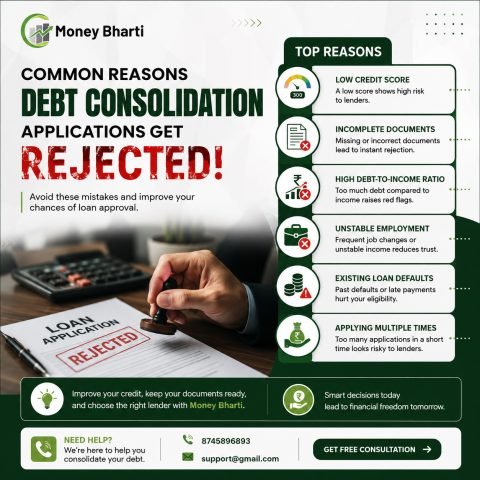
Common Loan Rejection Reasons
- CIBIL score below the lender's cut-off
- FOIR too high
- Recent missed payments or settled accounts
- Many applications within a short period
- Unstable income or unverifiable address
- Employer in a negative list
- Mismatched details across documents
Tips to Increase Approval Chances
- Clear overdue amounts first.
- Lower card utilisation below 30% before applying.
- Shortlist two or three lenders and apply to the best fit, not everywhere.
- Add a co-applicant with a strong profile if needed.
- Start with your salary bank, which may have pre-approved offers.
- Learn how to improve your credit score with debt consolidation.
Eligibility Score / Approval Score
Use this 100-point lender scorecard to compare offers:
| Factor | Weight |
|---|---|
| Total cost (rate + fees) | 25 |
| Transparency (clear KFS, no hidden add-ons) | 15 |
| RBI registration and reputation | 15 |
| Prepayment and foreclosure terms | 10 |
| Eligibility fit for your profile | 10 |
| Speed of approval and disbursal | 10 |
| Customer service and grievance handling | 10 |
| Direct payment to your old creditors | 5 |
80+: strong choice. 60-79: acceptable with caveats. Below 60: keep looking.
Loan Cost Breakdown
Offer A: ₹5,00,000, 36 months, 12%:
| Component | Amount |
|---|---|
| Principal | ₹5,00,000 |
| Total interest | ₹97,852 |
| Processing fee + GST | ₹8,850 |
| Total cost of borrowing | ₹1,06,702 |
Pros & Cons
| Pros | Cons |
|---|---|
| One EMI | Upfront fees |
| Lower interest | Hard enquiry on your report |
| Competition gives you leverage | Comparison takes time |
| Fixed payoff date | Risk of re-borrowing |
| No collateral | Penalties on late payment |
Myths vs Facts
| Myth | Fact |
|---|---|
| The lowest rate is always the cheapest loan | Fees and tenure change the real cost |
| Instant approval means a better offer | Speed often comes with a higher rate |
| A debt relief agency can erase my debt | You still owe the money, and settlement damages your record |
| All banks charge the same | Rates and fees vary widely by lender and profile |
| Comparing many lenders hurts my score | Soft checks usually do not; many formal applications can |
Loan Comparison Table (vs Other Loans)
| Option | Rate (indicative) | Best for | Watch out |
|---|---|---|---|
| Consolidation personal loan | 10.5-24% | Several unsecured debts | Fees |
| Credit card balance transfer | Low introductory rate | One card, short payoff | Rate jumps after the offer |
| Loan against property | ~9-13% | Large debts, lower rate | Property at risk |
| Debt settlement agency | N/A | Last resort | Severe score damage, fees |
Read debt consolidation vs balance transfer and debt consolidation vs debt settlement before you commit.
Latest RBI Guidelines & Compliance
Confirm current rules at rbi.org.in. Key principles that apply:
- Key Fact Statement (KFS): you are entitled to a standard summary of the APR, fees and total cost before you sign.
- Digital lending rules: loans must be disbursed to and repaid from your own bank account, not through a third party's pool account.
- Regulated entities only: check that the bank or NBFC is registered with the RBI.
- Cooling-off period: digital loans carry a short exit window if you repay the principal and proportionate interest.
- Fair recovery practices: agents must follow rules on timing and conduct.
- Grievance redressal: you can escalate unresolved complaints to the lender's nodal officer and then the RBI Ombudsman.
Financial Expert Opinion
Editorial note: replace with a named, attributable expert quote before publishing.
Credit counsellors usually advise borrowers to compare total cost of borrowing, not the headline rate, and to walk away from any company that asks for money before disbursal. A cheaper lender that takes a few extra days is often better than an instant lender that costs far more.
Latest Market Trends & Statistics
Add current figures with sources before publishing.
- Unsecured retail credit continues to grow quickly in India, and regulators have raised risk concerns.
- Lenders are tightening underwriting for borrowers with low scores and high FOIR.
- Digital lending rules have increased transparency requirements for apps.
- Comparison platforms and pre-approved offers are making rate-shopping easier.
Frequently Asked Questions
1. Who offers the best debt consolidation loan? There is no single best. Banks often win on cost, NBFCs on speed and flexibility. Your profile decides.
2. Is a debt consolidation company the same as a debt settlement company? No. A consolidation lender gives you a loan to clear debts. A settlement agency negotiates to pay creditors less and can hurt your credit.
3. How do I compare lenders properly? Request the KFS from each, then compare total cost, prepayment terms and service quality.
4. What CIBIL score do I need? Around 700+ for competitive rates; 650-699 may work at some NBFCs at a higher cost.
5. Should I pick the lowest interest rate? Only after checking fees and tenure. Total cost is the better test.
6. Are online lenders safe? Yes, if they are RBI-registered or partner with a regulated entity. Verify before sharing documents.
7. How many lenders should I apply to? Two or three at most, so you limit hard enquiries.
8. Can I prepay my consolidation loan? Usually yes. Check the foreclosure charges first.
9. Will the lender pay off my old creditors directly? Some do. If not, you must pay them yourself immediately.
10. Do I need collateral? No, most consolidation loans are unsecured.
11. How long does approval take? From minutes at some fintechs to about a week at public sector banks.
12. What fees should I expect? Processing fee, GST, possible foreclosure charges and late-payment penalties.
13. Can self-employed borrowers apply? Yes, with ITRs, bank statements and business proof.
14. What if my application is rejected? Ask for the reason, fix the issue and wait before reapplying.
15. How do I spot a fraudulent lender? Upfront fees, no RBI registration, pressure tactics and requests for OTPs or card details are red flags.
16. Can I consolidate with a co-applicant? Yes, it can improve eligibility and the rate.
17. Will my credit score improve? Usually, with on-time EMIs and lower card utilisation.
18. Where can I complain about a lender? Start with the lender's grievance officer, then escalate to the RBI Ombudsman.
Useful Tools (EMI, Eligibility, FOIR, etc.)
- EMI calculator: the debt consolidation EMI calculator lets you compare offers side by side.
- FOIR calculator: FOIR = (all monthly EMIs ÷ net monthly income) × 100. Aim to stay under 50%.
- Eligibility checker: a soft-enquiry check that does not affect your score.
- Total cost calculator: add interest and fees to see the real price.
- Free credit report from the bureaus once a year.
Financial Terms Glossary
- APR: annual percentage rate, the true yearly cost including fees.
- CIBIL score: a 300-900 credit score from TransUnion CIBIL.
- EMI: equated monthly instalment.
- FOIR: fixed obligation to income ratio.
- Foreclosure: closing a loan fully before the tenure ends.
- KFS: Key Fact Statement.
- NBFC: non-banking financial company.
- Debt settlement: negotiating to repay less than the amount owed.
- No Dues Certificate (NDC): proof that a loan or card is fully cleared.
- BNPL: buy now, pay later.
Related Articles
- Debt Consolidation Loan
- Debt Consolidation Loan in Delhi
- Debt Consolidation Loan in Jaipur
- Credit Card Debt Consolidation Loan
- Debt Consolidation vs Balance Transfer
Conclusion
The best debt consolidation company is the one that gives you the lowest total cost, clear terms and reliable service for your profile, not the one with the loudest ad. Compare at least three offers, read every Key Fact Statement and use the scorecard to decide.
Next step: List your debts, check your CIBIL score and compare offers from two or three RBI-registered lenders.
Compare Offers and Check Your Eligibility · Download the Lender Scorecard · Talk to a Loan Expert
Disclaimer: This article is for information only and is not financial advice or a ranking of any lender. Rates, fees and policies change; confirm with the lender and consult a qualified advisor before borrowing.