Quick Summary (30 Seconds Read)
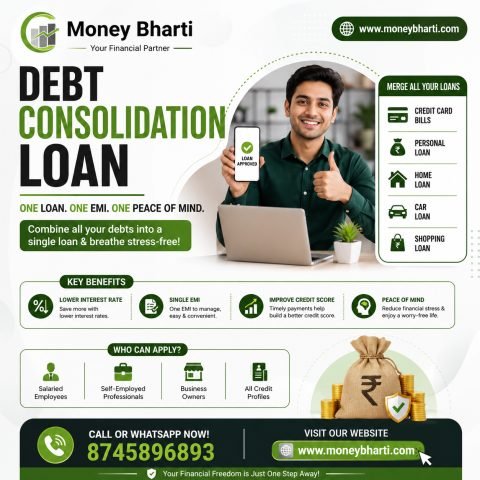
- If you are paying EMIs on 3 or more loans or cards, one lower-rate personal loan can clear them all and leave you with a single EMI.
- Credit card interest of 36-48% p.a. does the most damage; a personal loan may cost about 11-18% depending on your profile.
- In our example, a ₹6 lakh debt sees the monthly EMI fall by ₹5,218 and about ₹1.7 lakh saved overall after fees.
- Best fit: salaried or self-employed Jaipur residents with a CIBIL score of 700+ and stable income.
- Avoid it if your real problem is low income rather than a high interest rate.
Problem-Based Introduction
Ritu lives in Mansarovar, Jaipur. She has a credit card, an older personal loan and an instant loan app, each with a different due date. Over ₹25,000 leaves her account every month, yet the principal barely shrinks. Does this sound familiar? This guide explains how to replace multiple debts with one cheaper loan in Jaipur, when it makes sense and when it does not. For a wider overview, see our debt consolidation loan in Jaipur page.
Loan Overview
A debt consolidation loan is an unsecured personal loan used to pay off credit card balances, high-interest loans and app loans in one go. After that, you pay a single EMI to a single lender.
| Feature | Typical Range |
|---|---|
| Loan amount | ₹50,000 to ₹40 lakh |
| Tenure | 12 to 60 months (some up to 84) |
| Interest | ~10.5% to 24% p.a. |
| Security | Usually none |
| Disbursal | 24 hours to 5 working days |
Why People Need This Loan?
- Credit card revolving interest can reach 3-4% per month.
- Several due dates lead to late fees and credit score damage.
- Festive and wedding-season spending is a big trigger in Jaipur.
- Self-employed traders (Johari Bazaar, Sanganer textiles) often borrow short-term during slow periods.
- One EMI is simply easier to track and less stressful.
Is This Loan Right For You?
- Your total unsecured debt is above ₹1 lakh.
- You have at least 2-3 active loans or cards.
- The new loan's rate is lower than your current weighted average rate.
- Your income is stable and you can pay the EMI comfortably.
- You are willing to stop overspending on the cards afterwards.
Who Should Avoid This Loan?
- Your income has dropped and you cannot pay any EMI (talk to your lenders about restructuring first).
- You have only one low-rate loan, such as a home loan.
- Your CIBIL score is below 600, so you will not get a rate benefit.
- You will keep using the cards after consolidating.
- You are being approached by "debt settlement" agents making unrealistic promises.
Key Benefits
- Single EMI, single due date.
- Lower interest vs credit cards/app loans.
- Fixed tenure, so debt-free date clear.
- Credit score recover ho sakta hai (utilisation girti hai).
- No collateral required.
- Prepayment options (check foreclosure terms).
Risks You Should Know
- Processing fee of 1-3% plus GST is charged upfront.
- A longer tenure can raise your total interest.
- Hard enquiries cause a temporary dip in your score.
- Cleared cards can tempt you into spending again.
- A missed EMI brings penalties and score damage.
Loan Eligibility
| Criteria | Typical Requirement |
|---|---|
| Age | 21-60 years |
| Income (salaried) | ₹20,000-25,000+/month net |
| Income (self-employed) | ITR 2 years, business vintage 2+ years |
| CIBIL | 700+ ideal (650+ at some NBFCs) |
| Employment | 1 year total, 6 months current job |
| FOIR | Total EMIs under ~50-55% of income |
| Residence | Stable Jaipur address proof |
Not sure where you stand? Check the full debt consolidation loan eligibility criteria before you apply.
Required Documents
- PAN and Aadhaar (KYC)
- Address proof (Jaipur utility bill, rent agreement)
- Last 3 months salary slips + 6 months bank statement
- Self-employed: 2 years ITR, GST returns, business proof
- Latest credit card statements and loan foreclosure statements (for the debts being cleared)
- Passport-size photos
Interest Rates
Rates depend on CIBIL, income, employer category and lender. Indicative bands:
- CIBIL 780+: ~10.5-13%
- CIBIL 720-779: ~12-16%
- CIBIL 680-719: ~15-20%
- Below 680: 20%+ or rejection
For current lender-wise bands, see our debt consolidation interest rates guide.
Bank/NBFC Wise Interest Rate Comparison
Indicative starting ranges; actual offers vary. Verify on each lender's website before applying.
| Lender type | Indicative rate (p.a.) | Processing fee | Notes |
|---|---|---|---|
| Large private banks | ~10.5-18% | ~1-2.5% | Best for salaried, high CIBIL |
| Public sector banks (SBI, PNB, Bank of Baroda) | ~10.5-15% | ~0.5-1.5% | Lower rates, slower process; strong Jaipur branch network |
| Large NBFCs | ~11-24% | ~1-3% | Faster, flexible eligibility |
| Fintech lenders | ~12-30% | ~2-5% | Fast, costlier |
Processing Fees & Hidden Charges
- Processing fee: 1-3% of loan + 18% GST
- Foreclosure/part-prepayment: 0-5% (many banks nil after 6-12 months)
- Late payment: ~2% per month on overdue
- Cheque/ECS bounce: ₹400-750
- Loan insurance/bundled products: optional; ask to remove
- Document/stamp charges: small, but ask upfront
Our processing fee and charges guide explains every charge you may be asked to pay.
EMI Calculation with Real Example
Illustrative figures, calculated with the standard EMI formula.
Ritu's existing debts (₹6,00,000 total):
| Debt | Amount | Rate | Remaining tenure | EMI |
|---|---|---|---|---|
| Credit card | ₹2,50,000 | 42% | 36 months | ₹12,321 |
| Personal loan | ₹2,00,000 | 18% | 36 months | ₹7,230 |
| Instant app loan | ₹1,50,000 | 24% | 36 months | ₹5,885 |
| Total | ₹6,00,000 | ₹25,436 |
New consolidation loan: ₹6,00,000 at 13% for 36 months, EMI ≈ ₹20,218.
Formula: EMI = P × r × (1+r)^n / ((1+r)^n − 1), where r = annual rate ÷ 12 ÷ 100.
Try your own numbers in the debt consolidation EMI calculator.
EMI Comparison (Before vs After)
| Before | After | |
|---|---|---|
| Number of EMIs | 3 | 1 |
| Monthly outgo | ₹25,436 | ₹20,218 |
| Total repayment (36 mo) | ₹9,15,696 | ₹7,27,848 |
| Total interest | ₹3,15,696 | ₹1,27,848 |
Monthly & Total Savings Example
- Monthly saving: ₹25,436 − ₹20,218 = ₹5,218
- Total repayment saving: ₹9,15,696 − ₹7,27,848 = ₹1,87,848
- Processing fee (2% + GST): about ₹14,160
- Net saving: roughly ₹1,73,700 over 3 years
If Ritu puts the ₹5,218 saved each month into an emergency fund or prepayment, she can clear the loan even sooner.
Loan Amount & Tenure Options
On ₹6,00,000 at 13% p.a.
| Tenure | EMI | Total repayment |
|---|---|---|
| 24 months | ~₹28,521 | ~₹6,84,500 |
| 36 months | ~₹20,218 | ~₹7,27,850 |
| 48 months | ~₹16,093 | ~₹7,72,450 |
| 60 months | ~₹13,650 | ~₹8,19,000 |
Rule of thumb: choose the shortest tenure whose EMI you can pay comfortably. A longer tenure lowers the EMI but raises the total interest.
Step-by-Step Application Process
- List all debts: outstanding, rate, EMI, foreclosure charges.
- Check CIBIL score (free from official bureaus).
- Calculate FOIR and target EMI.
- Compare 3-4 lenders (rate, fees, prepayment terms).
- Apply online or at a Jaipur branch; avoid applying to 10 lenders at once.
- Submit documents and complete e-KYC/e-mandate.
- Get sanction letter, read terms carefully.
- Disbursal: ask for direct payment to creditors where available, or pay them yourself immediately.
- Collect No Dues Certificates and confirm old accounts are closed in CIBIL.
- Set auto-debit for the new EMI.
Processing Time & Disbursement Timeline
| Lender type | Approval | Disbursal |
|---|---|---|
| Fintech | Minutes to hours | Same day to 2 days |
| NBFC | 1-2 days | 2-3 days |
| Private bank | 1-3 days | 2-4 days |
| Public bank | 3-7 days | 5-10 days |
Real Customer Case Study
Illustrative case; names and figures are representative, not a specific customer.
Ritu Sharma, 34, marketing executive, Mansarovar, Jaipur. Net salary ₹75,000. Three debts totalling ₹6 lakh, EMIs ₹25,436 (about 34% of income). Missed one card due date, CIBIL dropped to 701. She applied for a ₹6 lakh loan at 13% with a private bank, cleared all three debts within 3 days, and now pays ₹20,218. Within 8 months her CIBIL rose above 740 and she added a ₹3,000 monthly SIP from the savings.
Customer Persona Example
| Attribute | Profile |
|---|---|
| Name | Ritu, 34 |
| Location | Mansarovar, Jaipur |
| Occupation | Salaried, private company |
| Income | ₹75,000/month |
| Pain point | 3 EMIs, 3 due dates, high card interest |
| Goal | Lower outgo, debt-free in 3 years |
| Fear | Score damage, hidden charges |
Loan Approval Journey (Timeline)
- Day 0: Debt list + CIBIL check
- Day 1: Compare lenders, apply
- Day 2: Document verification
- Day 3: Sanction + agreement e-sign
- Day 4-5: Disbursal and payoff of old debts
- Day 10-15: No Dues Certificates received
- Day 30-45: CIBIL updates reflect closures
Common Loan Rejection Reasons
- CIBIL below lender's cut-off
- FOIR too high (existing EMIs exceed ~55% of income)
- Recent missed payments or settled accounts
- Too many loan enquiries in 30-60 days
- Unstable job/income or unverifiable address
- Employer from a negative-listed category
- Document mismatch (name/DOB/address differences)
Tips to Increase Approval Chances
- Pay overdue amounts first.
- Keep credit card utilisation under 30% before applying.
- Apply to 2-3 lenders max, within a short window.
- Add a co-applicant with a good score if needed.
- Keep salary credits visible in one bank account.
- Start with your salary-account bank; they often give pre-approved offers.
- Correct errors in your credit report beforehand.
Eligibility Score / Approval Score
Quick self-check (score yourself):
| Factor | Points |
|---|---|
| CIBIL 750+ | 30 |
| CIBIL 700-749 | 20 |
| CIBIL 650-699 | 10 |
| FOIR under 40% | 25 |
| FOIR 40-55% | 15 |
| Job/business stability 2+ years | 20 |
| Salary account with lender | 10 |
| No missed payments in 12 months | 15 |
Total 80+: strong chance. 55-79: moderate. Below 55: fix score and FOIR first.
Loan Cost Breakdown
For Ritu's ₹6,00,000, 36 months, 13%:
| Component | Amount |
|---|---|
| Principal | ₹6,00,000 |
| Total interest | ₹1,27,848 |
| Processing fee + GST | ₹14,160 |
| Total cost of borrowing | ₹1,42,008 |
Pros & Cons
| Pros | Cons |
|---|---|
| One EMI | Upfront fees |
| Lower rate | Hard enquiry on score |
| Fixed payoff date | Risk of re-borrowing |
| Score can improve | Needs good CIBIL for best rates |
| No collateral | Late payment penalties |
Myths vs Facts
| Myth | Fact |
|---|---|
| Consolidation wipes my debt | It only restructures it; you still repay in full |
| It always lowers my score | Small short-term dip, usually recovers in a few months |
| Only salaried people qualify | Self-employed with ITR also qualify |
| Lower EMI always means cheaper loan | Not if tenure is much longer |
| Settlement is the same as consolidation | Settlement damages CIBIL badly; consolidation does not |
Loan Comparison Table (vs Other Loans)
| Option | Rate (indicative) | Best for | Watch out |
|---|---|---|---|
| Consolidation personal loan | 10.5-24% | Multiple unsecured debts | Fees |
| Credit card balance transfer | 0-2% per month intro | Single card, short payoff | Rate jumps after promo |
| Loan against property | ~9-13% | Large debts, lower rate | Property at risk |
| Gold loan | ~9-20% | Quick, small amounts | Gold at risk |
| Top-up on existing loan | Varies | Existing good borrowers | Only with current lender |
| Debt settlement | N/A | Last resort | Severe score damage |
Unsure whether to consolidate or settle? Read debt consolidation vs debt settlement before you decide.
Latest RBI Guidelines & Compliance
Check rbi.org.in for current rules. Key principles that apply:
- Key Fact Statement (KFS): lenders must give a standardised summary of APR, fees and total cost before you sign.
- Digital lending directions: disbursal and repayment must flow directly between your bank account and the lender; third-party pass-through is restricted.
- Cooling-off/look-up period: you can exit a digital loan within a short period by paying principal plus proportionate interest, without penalty.
- No floating-rate foreclosure charge on individual floating-rate loans; fixed-rate personal loans may carry charges as disclosed.
- Recovery conduct: agents cannot harass you; contact only within permitted hours.
- Credit bureau reporting: lenders must report to credit bureaus at regular intervals, and you can raise credit report disputes.
- Use only RBI-registered banks/NBFCs; verify on the RBI website and Digital Lending Apps list.
Financial Expert Opinion
Editorial note: replace with a named, attributable expert quote before publishing.
What experienced credit counsellors typically stress: consolidation works only when you fix the cause of the debt. Pair the new EMI with a written monthly budget, an emergency fund of at least one month's expenses and a rule to keep card utilisation under 30%. The loan is a tool, not a solution on its own.
Latest Market Trends & Statistics
Add current figures with sources before publishing.
- Unsecured personal loans and credit cards remain among the fastest-growing retail segments in India, and RBI has repeatedly flagged risk in them.
- Lenders are tightening underwriting for low-score and high-FOIR borrowers.
- Pre-approved offers via salary-account banks and UPI-linked apps are growing.
- Jaipur: rising salaried workforce in IT/BPO, plus a large trader and handicraft/jewellery base driving demand for both salaried and business-owner loans.
Frequently Asked Questions
1. What is a debt consolidation loan? A single personal loan used to pay off multiple existing debts so you repay one lender with one EMI.
2. Can I clear credit card dues with a personal loan? Yes, this is the most common use. Pay the card directly and keep it unused or low-use.
3. What CIBIL score do I need? 700+ for competitive rates; 650-699 may get approval at higher rates.
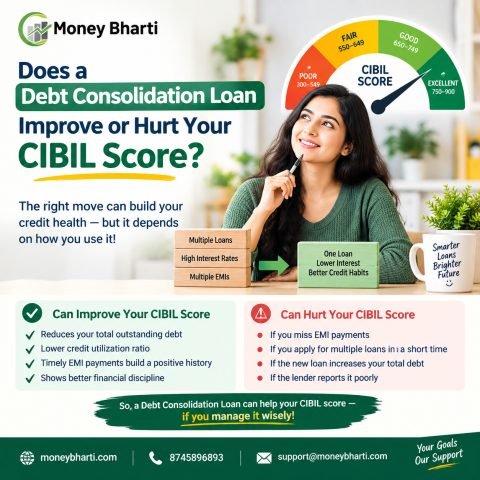
4. Will my credit score drop? A small temporary dip from the enquiry is normal; timely EMIs usually improve it.
5. Can self-employed people in Jaipur apply? Yes, with 2 years' ITR, bank statements and business proof.
6. How much can I borrow? Typically 10-20 times monthly net income for salaried, subject to FOIR.
7. Is collateral required? No, these are unsecured loans.
8. How fast can I get the money? From a few hours (fintech) to about a week (public banks).
9. Can I prepay or foreclose? Usually yes. Check charges, many lenders waive them after 6-12 months.
10. Is balance transfer better than consolidation? For one card with a short payoff plan, maybe. For multiple debts, a personal loan is simpler.
11. What if I have a missed payment? Clear it first and wait a few months, or apply with a co-applicant.
12. Does the lender pay my creditors directly? Some do. Otherwise you must pay them immediately and keep proof.
13. Should I close the old credit card? Not necessarily. Keep it open with low usage to preserve credit age, unless you can't resist spending.
14. Are there tax benefits? Generally no for personal loans used for debt repayment.
15. What if I can't pay the new EMI? Contact the lender early for restructuring options; ignoring it harms your score and invites recovery action.
16. Is debt settlement a good alternative? It is a last resort and severely hurts your credit record for years.
17. Can I get this loan with a joint applicant? Yes, a spouse or parent with good income can improve eligibility.
18. How do I avoid fraud? Never pay an advance "approval fee"; use only RBI-registered lenders and official websites.
Useful Tools (EMI, Eligibility, FOIR, etc.)
- EMI calculator: compare tenures before applying.
- FOIR calculator: FOIR = (all monthly EMIs ÷ net monthly income) × 100. Aim under 50%.
- Eligibility checker: soft-pull tools that don't hit your score.
- Debt-payoff calculator: compare avalanche (highest rate first) vs snowball (smallest balance first).
- Free CIBIL report from official bureau portals once a year.
Financial Terms Glossary
- APR: Annual percentage rate, the true yearly cost including fees.
- CIBIL score: 300-900 credit score from TransUnion CIBIL.
- EMI: Equated Monthly Instalment.
- FOIR: Fixed Obligation to Income Ratio.
- Foreclosure: Closing a loan fully before the tenure ends.
- KFS: Key Fact Statement.
- NBFC: Non-Banking Financial Company.
- Credit utilisation: Share of credit limit you are using.
- No Dues Certificate (NDC): Proof that a loan/card is fully cleared.
- Balance transfer: Moving card debt to another lender at lower interest.
Related Articles
- Personal Loan in Jaipur
- Balance Transfer Loan
- How to Improve Your CIBIL Score with Debt Consolidation
- Loan Against Property
- Business Loan for Traders and Wholesalers
Conclusion + Clear Call-to-Action
Multiple EMIs, high-interest cards and app loans only unravel when you follow a clear plan. With the right lender, the right tenure and strict spending discipline, a consolidation loan can save you lakhs in interest.
Next step: List all your debts, check your CIBIL score and compare offers from 2-3 lenders.
Check Your Eligibility in 2 Minutes · Download the Free Checklist · Talk to a Loan Expert in Jaipur
Disclaimer: This article is for information only and is not financial advice. Rates, fees and policies change; confirm with the lender and consult a qualified advisor before borrowing.