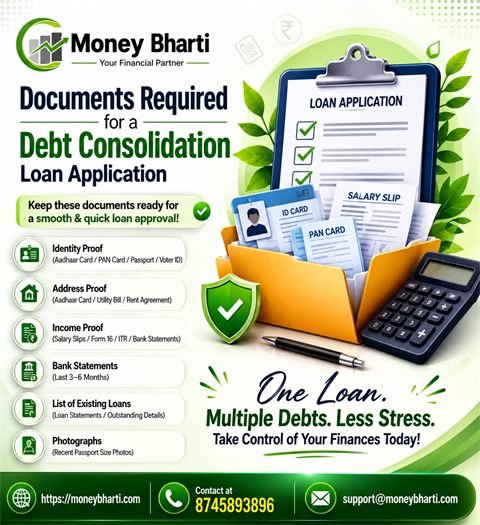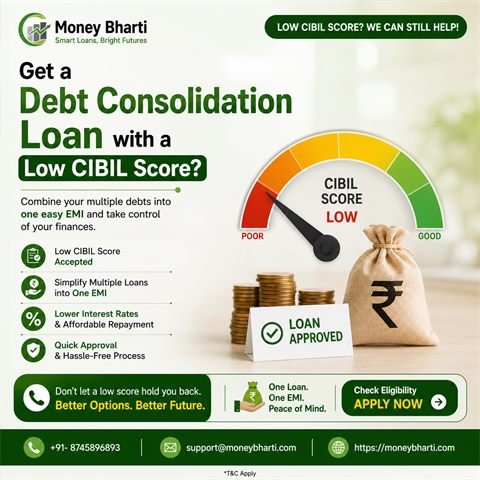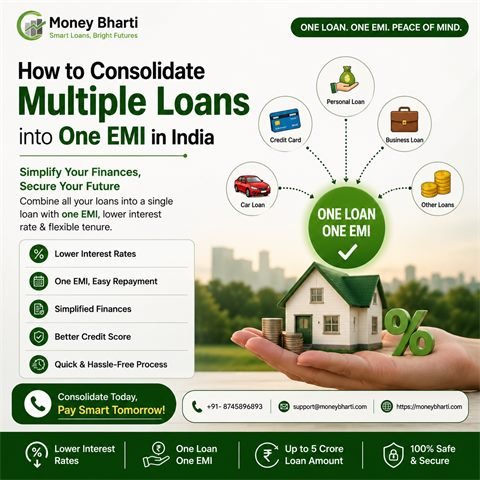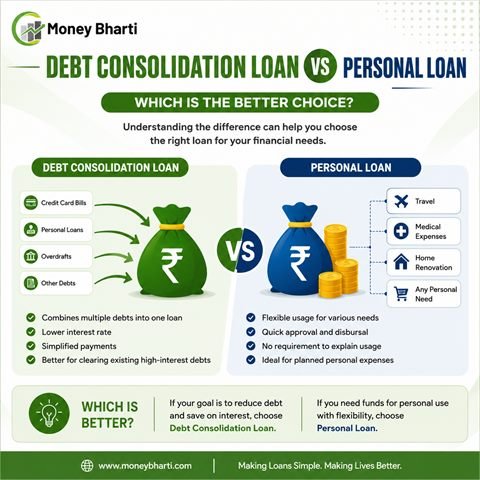
Consolidating multiple debts into a single loan is called debt consolidation. It is a simple calculation for converting multiple EMI to single EMI loan with a fixed interest rate and duration. Its objective is to help people pay off their dues without losing their savings or liquidating their assets. The good thing is that you can merge all debts, including credit cards, personal loans, medical loans, and automobile loans, into a single loan to pay off your debts in a hassle-free manner.
Understanding how debt consolidation works, its benefits, eligibility requirements, and potential drawbacks helps people make informed decisions. If you’re in debt, especially with credit cards, you can consider consolidating your debt into a single loan. It will free up your finances, increase cash flow, improve your credit score, and bring stability.
What is a debt consolidation loan?
For example, if you pay multiple credit cards, you pay more interest than needed. Each credit card charges a different interest rate. For this reason, you pay different EMIs on different dates. If you miss a payment, you are fined, and the penalty is added to the next EMI. You convert your credit cards into a single loan with a fixed interest rate. The consolidated loan interest rate is much lower than that of credit cards. It not only reduces your interest but also EMI and the total amount.
How does a debt consolidation loan work?
A balance transfer loan works like a low-interest personal loan. It is a financial tool developed by leading financiers, especially non-banking finance companies (NBFCs). They assess the credit score of potential borrowers and offer loans. It has multiple benefits that you’ll learn later in the blog.
Let’s consolidate your debt
1. Assess your existing debts
Calculate the total amount of debt you have, the total interest you pay, and the total of EMIs. This simple calculation will help find the right amount you need to pay off all your debts. However, the amount received as a loan depends on your eligibility.
2. Apply for a consolidation loan
Here, you’ll need the help of an experienced loan advisor. The advisor will hunt for the best offer matching your debt consolidation loan eligibility. The offer may fall short of your expectations, but accepting the offer can make you eligible for high-value loans.
3. Pay Off Your Debt
The loan amount will be transferred to your bank account after your loan application is processed. You can pay off the entire debt and save your money on interest and EMIs. The new loan’s EMI will start from next month. In this way, you save more money.
4. Repay the Consolidated Loan
You repay the new loan, fulfilling the terms and conditions. It not only reduces your debt burden but also improves your credit profile. As you pay your EMIs, you see a significant improvement in your finances. Low debt consolidation interest rates provide quick and lasting relief to debtors.
Benefits of a Debt Consolidation Loan
1. Simplified Finances
Juggling multiple EMIs and paying high interest rates can stress your finances. Consolidating debts into a single loan simplifies multiple payments into a single payment. You only need to manage one EMI. It reduces the risk of missed payments and high penalties.
2. Lower Interest Rates
Debt consolidation interest rates are much lower than what you pay for your credit cards. Depending on your credit profile, you may expect up to 50% reduction in the interest rate on your credit card bills. It is a huge respite from the burgeoning debt.
3. Increased Cash Flow
A reduction in interest rate can save you thousands of rupees every month and increase your cash flow. You will have more cash in hand after paying your EMI.
4. Reduced EMIs
Reduced interest will also reduce the EMI. Use a debt consolidation EMI calculator to find your EMI for a consolidated loan. You can get an approximate idea of your new EMI. It will help form an opinion on whether the debt consolidation is beneficial.
5. Improved Credit Score
Consolidating your debts can boost your overall credit score and eligibility for high-value loans at the lowest interest rate. If you ever need a loan, you won’t have any difficulty getting one.
Who is eligible for a debt consolidation loan?
Debt consolidation for salaried employees, self-employed, and businessmen comes with strict terms and conditions. If you meet the following criteria, you are eligible for a loan.
- Credit Score: A good credit score of at least 750 points can get you the lowest interest rates.
- Stable Income: A stable income from employment, self-employment, or business guarantees lenders that their money is in safe hands.
- Debt-to-Income Ratio: The ratio of your monthly income to your EMIs is a key factor in your loan eligibility. If it is low, you have a good chance of getting a low-interest loan.
Potential Drawbacks of a Consolidation Loan
- Longer and stricter repayment terms
- Additional fees and charges
- Risk of additional debt
- Qualification challenges
A debt consolidation loan works well if you increase your income and minimize your credit card usage.
Conclusion
Converting multiple EMI to single EMI loan is beneficial in many ways. It reduces interest, cuts down EMI, increases cash flow, and boosts credit score. If you are in debt, especially with credit cards, consider consolidating your debt to save your finances. A friendly loan advisor can find consolidated loans matching your needs. You can compare interest rates and other terms and conditions to choose a loan. It will be a big step toward financial management.