Quick Summary (30-Second Read)
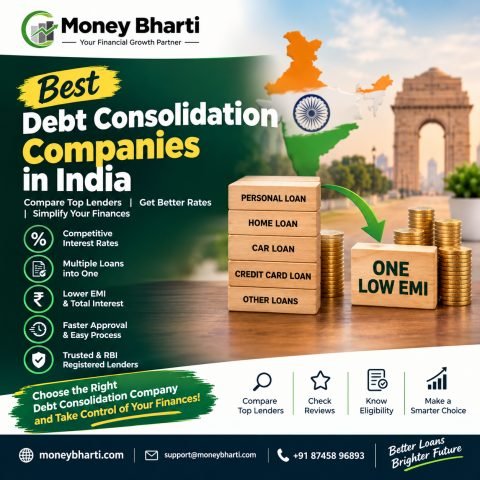
- A debt consolidation loan merges multiple business EMIs, credit card dues, and unsecured loans into a single monthly payment.
- Mumbai business owners typically save the most by moving credit card debt (36–42% APR) and short-term unsecured loans into a consolidation loan at 11–18% APR.
- Eligibility depends on business vintage (usually 2–3 years), GST/ITR filings, and a credit score of 650+.
- Delhi, Pune, and Bangalore business owners follow a near-identical process, with small city-level differences in lender density, average loan ticket size, and documentation norms — covered in detail below.
- Typical loan range: ₹1 lakh – ₹75 lakh; tenure 12–84 months; processing time 24–72 hours with complete documents.
- This is restructuring, not debt forgiveness — the principal stays the same; only the rate and repayment structure change.
Problem-Based Introduction
Running a business in Mumbai often means juggling more than one line of credit at the same time — a working capital overdraft, an unsecured business loan taken during a slow quarter, outstanding vendor credit converted into an EMI, and a business credit card that never quite gets paid off in full. Each of these carries its own due date, its own interest rate, and its own paperwork.
For a shop owner in Dadar, a trader in Bhuleshwar, or a small manufacturing unit in the MIDC belt near Andheri, this isn’t a hypothetical — it’s a monthly routine. Multiple EMIs on different dates increase the chance of a missed payment, which then triggers late fees, a dip in credit score, and collection calls that eat into time better spent running the business. The same pattern plays out for business owners in Delhi’s Karol Bagh and Chandni Chowk trading hubs, Pune’s Bhosari and Hadapsar industrial areas, and Bangalore’s Peenya and Jayanagar commercial belts.
A debt consolidation loan exists specifically to fix this structural problem — not by writing off debt, but by replacing several high-cost, scattered obligations with one loan at a lower, fixed rate. For the complete mechanics of how this works across all borrower types, see our full debt consolidation loan guide.
Loan Overview
| Parameter | Typical Range (Mumbai / Delhi / Pune / Bangalore) |
|---|---|
| Loan amount | ₹1 lakh – ₹75 lakh (business consolidation) |
| Interest rate | 11% – 18% p.a. |
| Tenure | 12 – 84 months |
| Processing fee | 1% – 3% + GST |
| Collateral | Usually none (unsecured) for tickets up to ₹25–30 lakh |
| Approval time | 24–72 hours with complete documents |
| Best suited for | Business owners with 2+ years vintage and multiple existing dues |
A debt consolidation loan for a business owner is functionally an unsecured business loan used for a specific purpose: closing out existing high-interest debts — credit cards, personal loans used for business, short-term unsecured business loans, or vendor-financing EMIs — and replacing them with one structured loan.
Why People Need This Loan?
Business owners across Mumbai, Delhi, Pune, and Bangalore typically turn to consolidation for the same handful of reasons:
- Cash flow is stretched thin by servicing 3–4 different EMIs with different due dates.
- Credit card float used to bridge working capital gaps has built up at 36–42% annual interest.
- A mix of formal and informal borrowing — bank loans plus loans from smaller NBFCs or fintech lenders — has become hard to track.
- Seasonal business cycles (festive-season stock buying, GST payment cycles) create temporary borrowing that never fully gets cleared before the next cycle begins.
- A missed payment or two has already dented the credit score, and the business owner wants to reset with a single, manageable obligation.
In Mumbai specifically, the concentration of trading and retail businesses means credit card-based working capital is unusually common — which is exactly the kind of high-cost debt consolidation is built to fix.
Is This Loan Right For You?
Likely a good fit if you:
- Are currently paying three or more separate EMIs or credit lines for the business.
- Have at least 18–24 months of business vintage with reasonably stable revenue.
- Carry a meaningful share of debt on credit cards or short-term unsecured loans at high interest.
- Have a credit score of 650 or above.
- Can comfortably afford a single new EMI once the old ones are closed.
Who Should Avoid This Loan?
- Businesses with highly irregular or seasonal income where even a single fixed EMI is hard to guarantee every month.
- Owners whose existing loans are already secured and low-cost (e.g., loan against property at 9–10%) — consolidating these into an unsecured loan usually raises the cost.
- Anyone planning to immediately re-use the credit cards or credit lines that get cleared — this is the single most common way consolidation backfires.
- Businesses already in default or restructuring with existing lenders, who may need a different resolution route rather than a fresh loan.
- Very small, short-term debts that would clear naturally within 2–3 months anyway — the processing fee may not be worth it.
Key Benefits
- One EMI, one due date — instead of tracking 3–4 separate payments across different lenders.
- Materially lower interest — moving 36–42% credit card debt to an 11–18% loan is where most of the saving comes from.
- Predictable cash flow planning — a fixed EMI and fixed end date make it easier to forecast monthly outgo, which matters more for a business than for an individual.
- Fewer bounce and late-fee incidents, each of which would otherwise also get reported to credit bureaus.
- Improved credit utilisation over time, since cleared credit cards lower the percentage of your limit in use.
- Business continuity — freed-up monthly cash flow can go back into inventory, payroll, or operations instead of interest payments.
Risks You Should Know
- A lower EMI isn’t automatically a win. If it comes from a longer tenure rather than a lower rate, you may pay more total interest over the life of the loan.
- Processing fees and foreclosure charges can offset part of the saving if not compared carefully across lenders.
- Running the cleared credit lines back up is the most common way business owners end up worse off — servicing the new loan and fresh debt.
- A hard credit enquiry from each direct application can temporarily affect your score; applying to multiple lenders in a short window compounds this.
- Business income volatility — if revenue dips, a fixed EMI (compared to a flexible overdraft) can feel more rigid.
Loan Eligibility
| Parameter | Mumbai | Delhi | Pune | Bangalore |
|---|---|---|---|---|
| Business vintage | 2+ years preferred | 2+ years preferred | 2+ years preferred | 2+ years preferred (1.5+ sometimes accepted for tech/services) |
| Annual turnover | ₹10–12 lakh+ | ₹10–12 lakh+ | ₹8–10 lakh+ | ₹10–12 lakh+ |
| Credit score | 700+ preferred, 650+ workable | 700+ preferred, 650+ workable | 700+ preferred, 650+ workable | 700+ preferred, 650+ workable |
| ITR filing | 2 years, consistent | 2 years, consistent | 2 years, consistent | 2 years, consistent |
| Existing obligations | Total EMIs under 50–55% of net business income | Same | Same | Same |
| Entity type accepted | Proprietorship, partnership, Pvt Ltd | Same | Same | Higher share of Pvt Ltd/LLP due to startup density |
The obligations-to-income ratio (often called FOIR — Fixed Obligation to Income Ratio) is usually the deciding factor across all four cities. A Mumbai trader with ₹1.5 lakh monthly business income and ₹60,000 in existing EMIs is already near the ceiling most lenders apply; consolidation only works if the post-consolidation EMI brings that ratio back under control. See our detailed debt consolidation loan eligibility criteria and the self-employed borrower guide for a fuller breakdown.
Required Documents
| Category | Documents |
|---|---|
| Identity & address proof | PAN (mandatory), Aadhaar, business registration proof |
| Business proof | GST registration, Udyam/MSME certificate (if applicable), shop & establishment licence |
| Income proof | ITR with computation (2 years), audited financials/P&L and balance sheet |
| GST returns | Last 12 months (GSTR-3B/GSTR-1 summary) |
| Bank statements | Last 12 months, primary current/business account |
| Existing debt proof | Latest statements for every loan, credit card, and credit line being consolidated |
| Photographs | Two passport-size |
For the complete, downloadable checklist, see documents required for debt consolidation.
Documentation requirements are near-identical across Mumbai, Delhi, Pune, and Bangalore, since these are largely RBI/lender-driven rather than city-specific. The one practical difference: Bangalore’s higher share of services and tech-adjacent businesses means some lenders there also accept invoice/contract-based income proof for consulting or freelance-heavy business models.
Interest Rates
| Component | Typical Range | Notes |
|---|---|---|
| Interest rate | 11% – 18% p.a. | Depends on credit score, vintage, and turnover |
| Processing fee | 1% – 3% + GST | Deducted upfront from disbursal |
| Foreclosure charge | Nil – 4% of outstanding | Matters if you expect to prepay from business cash flow |
| Part-prepayment | Nil – 3% | Some lenders allow one free prepayment per year |
| Bounce/late payment | ₹500 – ₹750 + GST | Also reported to credit bureaus |
Rates are largely consistent across the four cities for comparable credit profiles — the variation comes more from the lender mix (see below) than from the city itself.
Bank/NBFC Wise Interest Rate Comparison
| Lender | Indicative Rate (Business Consolidation) | Strongest Presence |
|---|---|---|
| HDFC Bank | 11.5% – 16% | All four cities, strong in Mumbai & Bangalore |
| ICICI Bank | 11.5% – 17% | All four cities |
| Axis Bank | 12% – 18% | Strong in Delhi NCR & Mumbai |
| Kotak Mahindra Bank | 12% – 17% | Mumbai, Pune |
| Bajaj Finserv | 13% – 20% | Pan-India, strong in Pune (HQ city) |
| Tata Capital | 12.5% – 18% | Mumbai, Pune |
| IDFC FIRST Bank | 12% – 18% | All four cities |
| Poonawalla Fincorp | 13% – 20% | Pune, Mumbai |
Rates are indicative market ranges as of 2026 for illustration and vary by lender policy, credit profile, and business category. Always confirm current rates directly with the lender before applying. For a full breakdown of what drives your rate, see debt consolidation interest rates explained.
Processing Fees & Hidden Charges
- Processing fee: 1–3% of loan amount + GST, usually deducted from the disbursed amount rather than billed separately.
- Documentation/legal charges: Some NBFCs add a flat documentation fee (₹1,000–₹5,000) on top of the processing fee.
- Foreclosure/prepayment charges: Range from nil to 4%, and this is where business owners most often lose money by not comparing before signing.
- Bounce charges: ₹500–₹750 + GST per instance, and each bounce is also reported to credit bureaus.
- Stamp duty: Varies by state — Maharashtra (Mumbai, Pune) and Karnataka (Bangalore) apply their own stamp duty schedules on loan agreements, which is a small but real cost often left out of EMI comparisons.
The rule that matters most: a slightly higher headline rate with no foreclosure charge frequently costs less overall than a marginally lower rate with a heavy exit penalty — especially for business owners who expect to prepay from a good sales quarter.
EMI Calculation with Real Example
Formula: EMI = [P × R × (1+R)^N] ÷ [(1+R)^N − 1] Where P = principal, R = monthly interest rate (annual ÷ 12 ÷ 100), N = tenure in months.
Worked example — Mumbai business owner consolidating ₹8,00,000 at 14%:
| Tenure | EMI | Total Interest | Total Repaid |
|---|---|---|---|
| 3 years | ₹27,350 | ₹1,84,600 | ₹9,84,600 |
| 4 years | ₹21,870 | ₹2,49,760 | ₹10,49,760 |
| 5 years | ₹18,610 | ₹3,16,600 | ₹11,16,600 |
Figures are illustrative and rounded, excluding processing fees.
Stretching the tenure from 3 to 5 years lowers the EMI by roughly ₹8,740/month but adds about ₹1.32 lakh in total interest — the same trade-off that applies whether you’re consolidating debt in Mumbai, Delhi, Pune, or Bangalore.
EMI Comparison (Before vs After)
Example: Mumbai retail business owner with three existing obligations
| Before Consolidation | Amount |
|---|---|
| Credit card EMI (business card) | ₹18,000 |
| Unsecured business loan EMI | ₹14,000 |
| Vendor-financing EMI | ₹6,500 |
| Total monthly outgo | ₹38,500 |
| After Consolidation | Amount |
|---|---|
| Single consolidated EMI | ₹29,800 |
| Number of due dates | 1 (instead of 3) |
| Monthly relief | ₹8,700 |
Monthly & Total Savings Example
Using the same profile — ₹8 lakh total debt, weighted average existing rate of ~24% (blending 40% credit card debt with 16–18% loan debt), moved to a 14% consolidation loan over 4 years:
| Metric | Before | After |
|---|---|---|
| Weighted average interest rate | ~24% | 14% |
| Monthly EMI (approx.) | ₹38,500 | ₹29,800 |
| Interest over remaining term | ~₹4,10,000 | ~₹2,49,760 |
| Total interest saved | — | ~₹1,60,000 |
The same persona pattern applies to a
trader in Delhi’s Sadar Bazaar, a manufacturing unit owner in Pune’s Chinchwad,
or a small IT services founder in Bangalore’s Koramangala — the debt structure
and consolidation logic stay the same; only the business category and seasonal
cash-flow pattern shift.
Loan Approval
Journey (Timeline)
Day 0
→ Eligibility check (instant, soft enquiry)
Day 0-1 → Document collection & submission
Day 1-2 → Lender verification (credit check, income check)
Day 2-3 → Approval decision
Day 3-4 → Loan agreement signed
Day 4-5 → Disbursement, existing lenders paid off
Day 5+ → NOCs collected, single EMI cycle begins
Day 0-1 → Document collection & submission
Day 1-2 → Lender verification (credit check, income check)
Day 2-3 → Approval decision
Day 3-4 → Loan agreement signed
Day 4-5 → Disbursement, existing lenders paid off
Day 5+ → NOCs collected, single EMI cycle begins
Common Loan
Rejection Reasons
•
Incomplete or inconsistent
bank statements — the single most common reason
across all four cities.
•
FOIR (obligation-to-income
ratio) too high even after accounting for the debts
being closed.
•
GST return mismatches with declared turnover.
•
Business vintage under 2
years without strong compensating factors.
•
Recent credit card or loan
defaults within the last 6–12 months.
•
Multiple hard enquiries in a short window from applying to several lenders directly.
Tips to Increase
Approval Chances
•
Apply through a single
marketplace comparison (soft enquiry) rather than multiple direct
applications.
•
Keep 12 months of clean,
unbroken bank statements ready — avoid cropped screenshots.
•
File GST returns and ITR consistently
and on time for at least 2 years before applying.
•
Where possible, pay down
small balances first to improve your FOIR before the application.
•
Provide a clear breakdown of
existing debts being closed, since lenders assess the post-consolidation
ratio, not just the current one.
•
Avoid taking on any new
credit in the 2–3 months before applying.
Eligibility Score
/ Approval Score
|
Factor
|
Weight
(Indicative)
|
|
Credit score (CIBIL/Experian)
|
High
|
|
Business vintage & consistency
|
High
|
|
FOIR (post-consolidation)
|
High
|
|
GST/ITR filing regularity
|
Medium
|
|
Banking behaviour (bounces, average balance)
|
Medium
|
|
Existing relationship with lender
|
Low–Medium
|
A rough self-check: if your credit score is 700+, business vintage
is 2+ years, and your post-consolidation EMI stays under ~50% of net monthly
business income, you sit in the “likely approval” band across Mumbai, Delhi,
Pune, and Bangalore lenders alike.
Loan Cost Breakdown
On a ₹8,00,000 consolidation loan at 14% over 4 years:
|
Cost
Component
|
Amount
|
|
Principal
|
₹8,00,000
|
|
Total interest
|
₹2,49,760
|
|
Processing fee (2% + GST)
|
~₹18,880
|
|
Total cost of the loan
|
~₹11,68,640
|
Comparing this total figure — not just the EMI — across lenders is
the single most reliable way to identify the genuinely cheaper offer.
Pros & Cons
Pros - Single EMI, single due date -
Lower blended interest rate - Improved credit utilisation over time -
Predictable, fixed repayment schedule - Frees up monthly cash flow for the
business
Cons - Doesn’t reduce the principal owed - Longer tenure can increase
total interest - Processing fees and possible foreclosure charges - Requires
discipline not to rebuild cleared credit lines - Fixed EMI is less flexible
than a revolving credit line during slow months
Myths vs Facts
|
Myth
|
Fact
|
|
“Consolidation
reduces the amount I owe.”
|
It
restructures the rate and repayment, not the principal.
|
|
“A
lower EMI always means I’m saving money.”
|
Only
if it comes from a lower rate, not a longer tenure.
|
|
“It
will hurt my credit score.”
|
A
soft eligibility check doesn’t; a formal application does trigger one hard
enquiry.
|
|
“Only
salaried individuals can consolidate debt.”
|
Business
owners with GST/ITR proof are a well-established borrower category for this
product.
|
|
“All
lenders in Mumbai offer the same rate.”
|
Rates
vary meaningfully by lender, credit profile, and business category —
comparison matters.
|
Loan
Comparison Table (vs Other Loans)
|
Aspect
|
Debt
Consolidation Loan
|
Business
Term Loan
|
Balance
Transfer
|
Loan
Against Property
|
|
Purpose
|
Close existing high-interest debts
|
Business expansion/capex
|
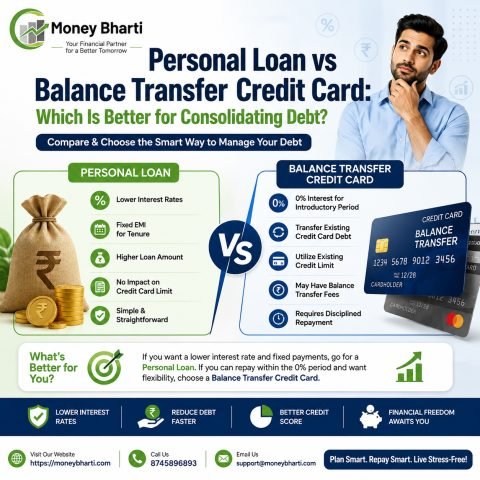
Move card balance to low intro rate
|
Any purpose, secured
|
|
Collateral
|
Usually none
|
Sometimes none
|
None
|
Yes (property)
|
|
Rate
|
11–18%
|
12–20%
|
0% intro, reverts to 34–42%
|
9–12%
|
|
Best for
|
Multiple existing dues
|
New funding need
|
Short payoff window
|
Large amount, long tenure
|
|
Risk
|
Moderate
|
Moderate
|
High reversion risk
|
Property at stake
|
Latest RBI
Guidelines & Compliance
Digital and NBFC lending in India now operates under RBI’s Digital
Lending Directions, which came into effect from January 1, 2026, building on
the original digital lending framework issued in September 2022. Key
protections relevant to business owners consolidating debt include:
•
Mandatory Key Fact Statements,
real-time credit bureau reporting, direct fund transfers, a public directory of
registered digital lending apps, and a regulated cooling-off period for
borrowers.
•
All loan disbursals and
repayments must flow directly between the borrower’s bank account and the
regulated lender, with a standardised Key Fact Statement provided before
sanction, and a cooling-off period during which a loan can be exited by paying
only principal and proportionate interest — no prepayment penalty.
•
Lenders are required to provide
a clear Key Facts Statement, keep total EMI obligations within roughly 50% of
income, and offer switching options on floating-rate loans.
Practical takeaway for Mumbai, Delhi, Pune, and Bangalore business
owners: only apply through RBI-registered banks,
NBFCs, or their listed lending service providers, insist on a Key Fact
Statement before signing, and treat any lender who skips this disclosure as a
red flag.
Financial Expert Opinion
Financial advisors consistently frame debt consolidation as a restructuring
tool, not a fix for the underlying spending or cash-flow pattern. For a
business owner, the guidance that comes up most often is: consolidation should
follow — not replace — a review of why the debt built up in the first place. A
consolidated loan that lowers the interest rate but is followed by the same
borrowing pattern (running the cleared credit card back up during the next slow
month) typically leaves the business worse off within 12–18 months. The
consistent advice across Mumbai, Delhi, Pune, and Bangalore advisory circles is
the same: fix the cash-flow gap first, then use consolidation to clean up the
cost of debt that’s already there.
Latest Market
Trends & Statistics
•
Digital lending is projected to
represent 62% of all new personal and business loan disbursals in India by
2026.
•
Personal and business loan
disbursals reached roughly ₹8.5 lakh crore in FY24, reflecting the scale of
unsecured lending that consolidation products now compete within.
•
Credit card revolving balances
in urban India continue to carry the highest effective rates among common debt
types, which is why card debt remains the largest single driver of
consolidation demand in metro markets like Mumbai and Delhi.
•
NBFC participation in business
debt consolidation has grown steadily as banks tighten eligibility for
smaller-ticket unsecured business loans, a trend visible across all four cities
covered here.
Frequently Asked
Questions
1. Can a business owner in Mumbai consolidate both personal and
business debt into one loan? Yes, if both are
unsecured and the lender’s policy allows it — many consolidation loans for
self-employed applicants blend business and personal unsecured debt into one
facility.
2. Is a debt consolidation loan the same as a business loan? Functionally, it’s a business loan used for a specific purpose —
closing existing debts — rather than for new capital expenditure.
3. What credit score do I need in Delhi, Pune, or Bangalore? 700+ gives the best rates and widest lender choice; 650–700 still
gets offers, usually at a higher rate.
4. Does consolidating debt hurt my business credit profile? A soft eligibility check does not; only a formal application
creates a hard enquiry, and on-time repayment afterward typically helps your
profile over time.
5. Can I include GST-related short-term borrowing in consolidation? Yes, if it’s unsecured and documented, most lenders will include
it.
6. How much can a business owner borrow for consolidation? Typically ₹1 lakh to ₹75 lakh, depending on turnover, vintage, and
existing obligations.
7. What tenure should I choose? The
shortest tenure whose EMI you can comfortably sustain — longer tenures reduce
the EMI but increase total interest.
8. Do Mumbai lenders charge higher rates than Pune or Bangalore
lenders? Not systematically — rates depend more on
credit profile and lender policy than on city, though average ticket sizes
differ.
9. Can I consolidate loans from different banks and NBFCs together? Yes, debts across any number of lenders can be combined into one
consolidation loan.
10. What documents does a self-employed business owner need? GST returns, 2 years of ITR with computation, audited financials,
12 months of bank statements, and statements for every debt being closed.
11. Will applying to multiple lenders in Mumbai and Delhi hurt my
score? Yes — each direct application is a hard
enquiry; use a soft-enquiry comparison first.
12. Is collateral required? Usually not,
for tickets up to roughly ₹25–30 lakh; larger amounts may require security
depending on the lender.
13. What happens to my old business loans after consolidation? They should be paid off and marked closed — always collect a No
Objection Certificate from each cleared lender.
14. Can a business with under 2 years of vintage apply? It’s harder but not impossible, particularly with strong
compensating factors like high turnover or a co-applicant.
15. Is a longer tenure ever the right choice? Only if the lower EMI is genuinely necessary for cash-flow survival
— it will increase total interest paid.
16. Can I prepay the consolidation loan early? Usually after 6–12 EMIs, with charges ranging from nil to about 4%
of the outstanding balance.
17. What is FOIR and why does it matter?
Fixed Obligation to Income Ratio — the share of your income already committed
to EMIs. Lenders typically cap this at 50–55%, and it’s the main factor
deciding approval and loan amount.
18. Should I close my business credit cards after consolidating? Not necessarily — but reduce the limits or stop using them if
there’s any risk of running the balance back up.
19. Are NBFC rates always higher than bank rates? Generally yes, but NBFCs are more flexible on eligibility, which
can matter more than the rate difference for some business profiles.
20. Does this loan require me to disclose my business to the bureau
differently than a personal loan? No — it’s
reported like any other unsecured loan, under the business owner’s personal or
business credit profile depending on the entity type.
-----------------------------------------------------------------------------------------------------------------
Financial Terms Glossary
•
APR (Annual Percentage
Rate): The total yearly cost of a loan including
interest and fees.
•
FOIR: Fixed Obligation to Income Ratio — total EMIs as a percentage of
net income.
•
NOC: No Objection Certificate — confirmation from a lender that a loan
has been fully repaid and closed.
•
Foreclosure: Paying off a loan in full before the end of its tenure.
•
Key Fact Statement (KFS): RBI-mandated standardised disclosure of a loan’s true cost, given
before sanction.
•
Vintage: How long a business has been operational, used as an eligibility
factor.
•
Unsecured Loan: A loan not backed by collateral such as property or gold.
Related Articles +
Internal Links
Conclusion + Call-to-Action
For business owners in Mumbai, Delhi,
Pune, or Bangalore juggling multiple EMIs, credit card float, and short-term
unsecured loans, a debt consolidation loan is less about borrowing more and
more about borrowing smarter — replacing a scattered, high-cost debt
structure with one predictable, lower-rate obligation. It works best when
paired with a genuine change in spending or credit-card habits, not as a
one-time fix layered on top of the same pattern.
If you’re currently managing more than
one business EMI or credit line, the first step is a straightforward one: check
what you actually qualify for before deciding anything.
Check your eligibility in under a
minute — soft enquiry, no impact on your credit score, offers compared from
100+ RBI-registered banks and NBFCs.