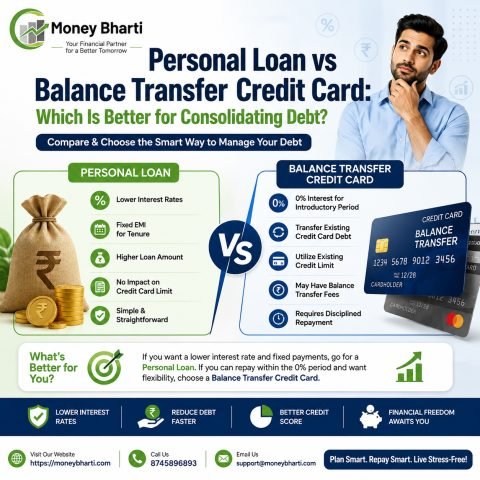
Ankit needed ₹3 lakh for his sister's wedding expenses. He took the first personal loan offer that came through an SMS, signed the papers within a day, and moved on. Two years later, he realised he was still paying almost the same EMI as someone who had borrowed ₹4.5 lakh — all because he never checked the processing fee or the real interest rate hidden behind a flashy "starting from 10.5%" ad.
The number on the loan brochure is rarely the number you actually end up paying. Processing fees, prepayment penalties, insurance add-ons, and a tenure chosen for comfort rather than cost all quietly add to what a personal loan really costs you. This article breaks down that real cost — and the mistakes most borrowers miss that push it higher than it needs to be.
What is a Personal Loan?
A personal loan is an unsecured loan given by banks and NBFCs for any personal purpose — no collateral, no security, and no explanation needed for what you're using it for. You borrow a fixed amount, repay it in EMIs over a set tenure, and the loan closes once the last EMI is paid.
Because there's no collateral involved, lenders decide your eligibility and interest rate almost entirely based on your income, credit score, and repayment history.
Benefits of a Personal Loan
Used sensibly, a personal loan offers real advantages:
- No collateral required – your house, car, or fixed deposit stays untouched
- Quick disbursal – many lenders release funds within 24 to 48 hours
- Flexible end use – medical bills, travel, wedding, education, or debt repayment
- Fixed EMI – predictable monthly outgo makes budgeting easier
- Builds credit history – timely repayment improves your credit score for future borrowing
Key Features
| Feature | Typical Range in India |
|---|---|
| Loan Amount | ₹50,000 to ₹40 lakh |
| Tenure | 1 to 5 years |
| Interest Rate | 10.5% to 24% per annum |
| Processing Fee | 0.5% to 3% of loan amount |
| Collateral | Not required |
| Disbursal Time | Same day to 3 working days |
Actual figures depend on the lender, your income, and your credit profile, so treat this as a starting reference, not a guarantee.
Eligibility Criteria
Most banks and NBFCs in India check for the following before approving a personal loan:
- Age between 21 and 60 years (salaried) or up to 65 (self-employed)
- Minimum monthly income of ₹15,000 to ₹25,000, depending on the city
- Credit score of 700 or above for the best interest rates
- Minimum 1 to 2 years of work experience, with at least 6 months at the current job
- A healthy debt-to-income ratio, so lenders can see you can afford another EMI
Eligibility isn't identical for everyone — it's worth checking personal loan eligibility by salary, by CIBIL score, and by occupation, since lenders apply different cut-offs depending on which bracket you fall into. Self-employed applicants are usually assessed on business vintage and income tax returns rather than salary slips — you can check the exact eligibility criteria for self-employed applicants separately.
Documents Required
Keep these ready to avoid delays in processing:
- PAN card and Aadhaar card
- Recent salary slips (last 3 months) or ITR for self-employed applicants
- Bank statements (last 3 to 6 months)
- Passport-size photographs
- Address proof
- Employment proof or business registration documents, where applicable
Interest Rate: What Actually Affects It
Personal loan interest rates aren't random — a few clear factors decide where you land:
- Credit score – 750 and above usually unlocks the best rates
- Income and employer profile – salaried employees at listed or reputed companies often get preferential pricing
- Existing relationship with the lender – having a salary account or prior loan with the same bank can help
- Loan amount and tenure – shorter tenures sometimes carry slightly better rates
- Market conditions – rates shift with RBI's repo rate changes, so timing your application can matter
Example
Meera needed ₹2 lakh for a medical emergency. She compared two options before applying:
- Lender A: 14% interest, 2% processing fee, 3-year tenure → EMI of about ₹6,835
- Lender B: 16% interest, 1% processing fee, 3-year tenure → EMI of about ₹7,032
At first glance, Lender B's lower processing fee looked attractive. But over 3 years, the higher interest rate meant she would pay roughly ₹7,000 more in total compared to Lender A. She chose Lender A, and the small effort of comparing two offers saved her a meaningful amount by the time the loan closed.
Step-by-Step Process to Apply
- Check your credit score – know where you stand before approaching any lender
- Decide the exact amount you need – borrowing more than necessary only adds cost
- Compare offers from at least 3 lenders – look at interest rate, processing fee, and prepayment charges together
- Use an EMI calculator – confirm the EMI fits comfortably within your monthly budget
- Keep documents ready – incomplete paperwork is the most common reason for delays
- Read the loan agreement fully – check foreclosure charges and penal interest clauses before signing
- Set up auto-debit – avoid missing EMIs due to a forgotten manual payment
- Track your repayment schedule – know exactly when the loan will close and plan around it
Common Mistakes to Avoid Before Taking a Personal Loan
1. Borrowing More Than You Actually Need
It's tempting to take a slightly higher loan "just in case." But every extra rupee borrowed comes with interest attached for the entire tenure. Borrow only what the actual need requires.
2. Not Comparing Interest Rates Across Lenders
Many borrowers apply to whichever bank sends the first offer or has a branch nearby. As Meera's example shows, a lower processing fee can hide a higher effective cost. It helps to browse personal loan offers across banks before you settle on one, and always compare the total repayment amount, not just the headline rate.
3. Ignoring the Processing Fee and Other Charges
Processing fees, documentation charges, and GST on top of these can add up. A loan that looks cheap on interest alone may not be cheap once every charge is added in.
4. Choosing a Longer Tenure Without Checking Total Interest
A longer tenure lowers your EMI, but it stretches out interest payments significantly. A ₹5 lakh loan over 5 years instead of 3 years can mean paying well over ₹50,000 more in total interest, even at the same rate.
5. Applying to Multiple Lenders at the Same Time
Each application triggers a hard inquiry on your credit report. Applying to five lenders within days of each other can pull your credit score down right when you need it strong.
6. Not Reading the Foreclosure and Prepayment Terms
Some loans charge a penalty if you try to close them early, even though early closure would save you interest. Knowing this in advance helps you plan repayment better, especially if you expect a bonus or windfall income later.
7. Missing EMI Payments
A single missed EMI attracts late fees and can hurt your credit score for months. Setting up auto-debit removes the risk of forgetting a due date.
8. Taking a Loan to Fund Lifestyle Expenses Repeatedly
Using a personal loan for a one-time need is reasonable. Taking a fresh loan every year to fund vacations or gadgets, without a clear repayment plan, is how manageable debt turns into a long-term burden.
9. Not Checking the Lender's Credibility
Some digital lending apps operate with unclear terms or aggressive recovery practices. Stick to RBI-registered banks and NBFCs, and verify any app's registration before sharing your documents.
10. Signing Without Understanding the Full Agreement
Loan agreements are often long, and it's easy to skim through them. But clauses on penal interest, late payment charges, and insurance add-ons are usually in the fine print. Reading the full agreement before signing prevents unpleasant surprises later.
Pros and Cons at a Glance
| Pros | Cons |
|---|---|
| No collateral needed | Higher interest rate than secured loans |
| Fast approval and disbursal | Processing fees and hidden charges |
| Flexible usage, no restrictions | Longer tenure means more total interest |
| Builds credit score with timely payment | Risk of over-borrowing |
| Fixed EMI for easy budgeting | Penalty for missed payments or early closure |
Personal Loan vs Loan Against Property vs Credit Card Loan
| Factor | Personal Loan | Loan Against Property | Credit Card Loan |
|---|---|---|---|
| Collateral | Not required | Required (property) | Not required |
| Interest Rate | Moderate (10.5% to 24%) | Lower (8% to 14%) | High (24% to 42%) |
| Loan Amount | Up to ₹40 lakh | Up to several crores | Usually smaller, card-limit based |
| Disbursal Time | 1 to 3 days | 1 to 3 weeks | Instant |
| Best suited for | Medium-term needs, emergencies | Large amounts, longer tenure | Very short-term, small amounts |
Frequently Asked Questions
Is a personal loan a good idea for a wedding or medical emergency? Yes, if the EMI fits comfortably within your monthly budget and you've compared at least a few lenders before applying.
Does applying for a personal loan hurt my credit score? A single application causes a small, temporary dip due to the credit inquiry. Multiple applications within a short period can hurt it more noticeably.
Can I get a personal loan with a low credit score? Yes, but expect a higher interest rate, and some NBFCs may ask for a co-applicant or additional documentation.
Should I choose the shortest possible tenure? Not necessarily the shortest, but shorter than what feels "comfortable." Pick a tenure where the EMI is manageable without stretching the loan longer than needed, since that adds unnecessary interest.
What happens if I miss an EMI payment? You'll likely be charged a late fee, and it will be reported to credit bureaus, which can lower your credit score. Repeated misses can lead to recovery calls and further damage to your credit profile.
Conclusion
The real cost of a personal loan is almost never just the interest rate on the brochure. It's the processing fee, the prepayment penalty you didn't expect, the tenure that quietly added months of extra interest, and the insurance add-on you didn't ask for. Most borrowers don't get trapped by one big mistake — they get there through several small ones that go unchecked.
Before you apply, work out the exact amount you need, compare at least three lenders on total cost, not just interest rate, and confirm the EMI genuinely fits your monthly budget. Add up every fee and charge before you sign, not after. Get these basics right, and you'll know the real cost of your loan upfront — instead of discovering it two years in, like Ankit did.