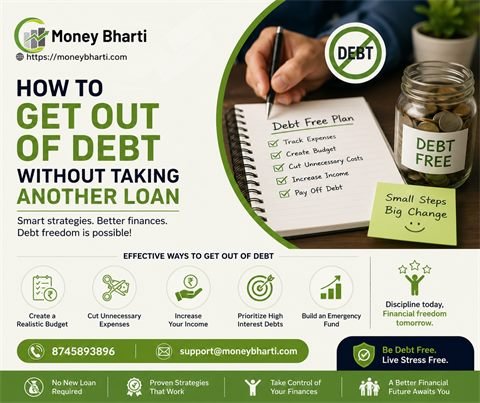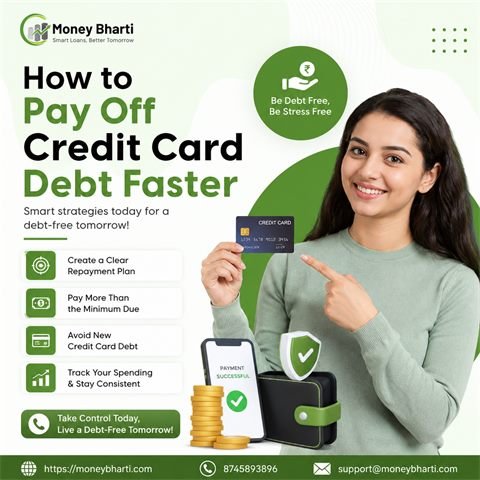
Salary hits the account at the end of the month, and within a day or two, three or four EMIs get deducted. What's left over is rarely enough to breathe easy. This isn't just about a shortage of money — it's a mental burden too. Multiple loans, different due dates, recurring collection calls, and the constant fear that a missed EMI might drag down your CIBIL score.
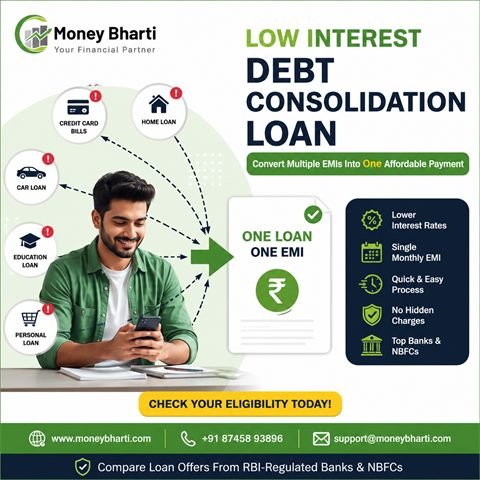
This is exactly where a debt consolidation loan becomes a practical option. In simple terms, it means combining several smaller and larger debts into a single loan, so you end up with one EMI, one due date, and often a lower overall interest cost — making repayment far easier to manage.
But it's just as important to understand that debt consolidation isn't a magic fix. It's a tool — and like any tool, the outcome depends entirely on how it's used. In this article, we'll walk through a few realistic examples to see when consolidation works well, when it doesn't, and what habits successful borrowers tend to share.
What Actually Makes a Debt Consolidation Story "Successful"?
Success isn't just about merging debts into one EMI. It's generally considered a success when:
- The monthly EMI burden becomes lower or more manageable
- Overall interest cost drops (especially compared to high-interest debts like credit cards)
- Budgeting becomes simpler and easier to stick to
- Payments start happening on time, with fewer missed EMIs
- The CIBIL score gradually improves over a few months
- Day-to-day financial stress reduces
Keep in mind — this is a gradual process, not an overnight transformation.
Before vs. After: A Clear Picture
| Aspect | Before Consolidation | After Consolidation |
| Number of loans/cards | 4-5 separate EMIs/bills | 1 EMI |
| Interest rate | Often 30-40%+ (credit cards) | Comparatively lower, fixed rate |
| Payment status | Occasional missed payments | Mostly on-time |
| Mental state | Constant stress, tracking multiple due dates | One due date, better planning |
| Impact on CIBIL | Declining or stagnant | Gradual improvement |
This table shows a general trend — everyone's experience will differ depending on the terms of the new loan and the financial habits adopted afterward. Before applying, it's a good idea to run your numbers through a debt consolidation EMI calculator to see how much your monthly outflow could actually change.
Case Study 1: The Salaried Employee
Situation: A 32-year-old private-sector employee earning around ₹55,000 a month had a personal loan, outstanding balances on two credit cards, and a consumer durable loan (for a phone/laptop). Altogether, around 4 separate EMIs/bills were eating up nearly 55-60% of the monthly salary.
The mistake: He had started paying only the minimum due on his credit cards, letting compounding interest quietly pile up on the outstanding balance.
The solution: He took a debt consolidation loan, merging all outstanding balances into a single fixed-rate EMI.
Result after 12 months: Monthly payments dropped, on-time payment habits developed, and the CIBIL score gradually started improving.
Key Takeaway: Paying only the minimum due on credit cards is a common mistake that multiplies the interest burden many times over. Consolidation helped break that cycle — but the real turnaround came from disciplined repayment.
For salaried professionals in a similar situation, it's worth looking at how debt consolidation for salaried employees typically works, since eligibility and loan terms are often assessed differently based on salary and job stability.
Case Study 2: The Small Business Owner
Situation: A small retail store owner faced seasonal ups and downs in cash flow. To pay suppliers and restock inventory at different times, he had taken several small business loans from different sources.
The challenge: Tracking different lenders' interest rates and repayment cycles became difficult, throwing off his cash flow planning.
The solution: All the smaller loans were merged into a single consolidated business loan, resulting in one predictable monthly outflow.
Result: The business owner can now plan monthly expenses more effectively and prepare in advance for seasonal demand.
Key Takeaway: For a business, consolidation isn't just about saving on interest — it also improves the predictability of cash flow.
Case Study 3: The Credit Card Debt Story
Situation: Outstanding balances across three different credit cards added up to around ₹3 lakh, with interest rates as high as 36-42% annually.
The problem: Interest alone was consuming such a large share of each payment that the principal amount barely reduced month over month.
The solution: A personal loan for debt consolidation was used to pay off the balances on all three cards, bringing the effective interest rate down significantly (from the 30%+ range to a much lower single or low-double-digit rate).
Result: A fixed monthly EMI was set, and now a much larger portion of every payment goes toward reducing the principal, making the end of the debt actually visible. This is a fairly typical example of credit card debt consolidation in action.
Key Takeaway: High-interest credit card debt is the "classic" case where consolidation offers the most benefit — provided the cards aren't put back into heavy use afterward.
Case Study 4: The Newly Married Couple
Situation: A loan taken to cover wedding expenses, along with a pre-existing personal loan and both partners' credit card bills, made managing the household budget increasingly difficult.
The challenge: Two different sets of financial habits and overlapping liabilities, with no shared tracking system between the couple.
The solution: The couple consolidated all their debts into a single joint consolidation plan and started building a shared monthly budget.
Result: One EMI, clearer financial goals, and room to start planning for the future (like saving for a home or a child).
Key Takeaway: Getting finances organized into one clear system early in a marriage significantly reduces confusion and stress down the line.
Case Study 5: The Medical Emergency
Situation: A sudden medical emergency in the family required urgent funds to cover hospital bills, borrowed at different times from friends, relatives, and an NBFC.
The challenge: Some of the borrowed amounts had no fixed interest but carried social pressure to repay quickly, while the NBFC loan had its own fixed EMI schedule.
The solution: A consolidation loan was used to pay off the NBFC balance and some of the personal borrowings, leaving a limited, clearly defined set of obligations.
Result: The family's mental burden eased significantly, since there was now just one EMI to track instead of answering to several people at different times.
Key Takeaway: In unexpected situations like medical emergencies, debt consolidation isn't just about money — it can also relieve the strain on relationships and peace of mind.
Common Habits Shared by Successful Borrowers
A clear pattern emerges across these stories. Borrowers who genuinely benefited from consolidation tended to:
- Build a clear monthly budget
- Cut back on unnecessary expenses
- Never miss an EMI
- Gradually start building an emergency fund
- Use credit responsibly instead of falling back into the same cycle
- Check their credit report regularly
Mistakes That Could Have Ruined Their Success
Showing only the positive side would be an incomplete picture. In reality, many people fall back into debt even after consolidating, if they make mistakes like:
- Taking on a new loan right after consolidating
- Going back to heavy credit card use
- Missing payments on the new consolidated EMI
- Not fully understanding loan terms (processing fees, prepayment charges)
- Choosing an unnecessarily long tenure just to lower the EMI, which increases total interest paid
Expert Insights
Financial advisors generally recommend:
- Comparing offers from at least 3-4 lenders before consolidating
- Reading the fine print carefully — processing fees, foreclosure charges, and other hidden costs
- Not consolidating unnecessarily if your existing loans already carry a lower interest rate
- Maintaining repayment discipline even after getting the new loan — that's what determines the actual outcome
Is Debt Consolidation Right for Everyone?
It may help if:
- You have multiple high-interest debts (especially credit cards)
- You're struggling to manage several different due dates
- Your income is stable and you can comfortably afford the new EMI
Be cautious if:
- Your existing loans already carry a lower interest rate
- Your income is uncertain or irregular
- Your spending habits are still not in control (since consolidation fixes the symptom, not the underlying cause)
Quick Self-Assessment
Ask yourself:
- Do you have more than three active loans/cards?
- Are multiple EMIs becoming difficult to manage?
- Is a high-interest credit card balance continuing to grow?
- Have you missed an EMI recently?
If you answered "yes" to most of these, it may be worth seriously considering debt consolidation — you can check the debt consolidation loan eligibility criteria to see where you stand.
Frequently Asked Questions (FAQs)
1. Does debt consolidation improve your CIBIL score? Timely payments and better debt management can improve your score over time, though there may be a small, temporary dip initially due to the new loan.
2. How long does the consolidation process take? This depends on the lender and documentation required — typically anywhere from a few days to 2-3 weeks.
3. Is debt consolidation easily available in India? Yes, many banks and NBFCs offer debt consolidation through personal loans.
4. Can self-employed borrowers apply? Yes, but they'll need to provide income proof and business documents, and terms may differ from those offered to salaried applicants.
5. What documents are typically required? Usually identity proof, address proof, income proof, and statements for existing loans/cards.
6. Is a consolidation loan secured or unsecured? In most cases it's an unsecured personal loan, though secured options are available in some situations.
7. What happens if I can't pay the new consolidated EMI either? This can worsen the underlying problem, which is why it's important to honestly assess your repayment capacity before taking the loan.
(For more detailed questions, refer to the related pages linked below.)
Conclusion
One thing becomes clear across these stories: success doesn't come from a single loan. It comes from disciplined repayment, smart budgeting, and long-term thinking. Debt consolidation can be a genuinely useful tool for untangling multiple debts — but it's not a guarantee of financial success on its own.
If you're feeling weighed down by multiple EMIs, the first step is an honest look at your current situation, followed by comparing the options available, and then making a well-considered decision.