Every month, thousands of people in India take one loan just to pay off another. At first, it feels like an easy fix. But over time, it usually turns into a cycle — one loan gets closed, another one opens up, and the total amount you owe never really shrinks.
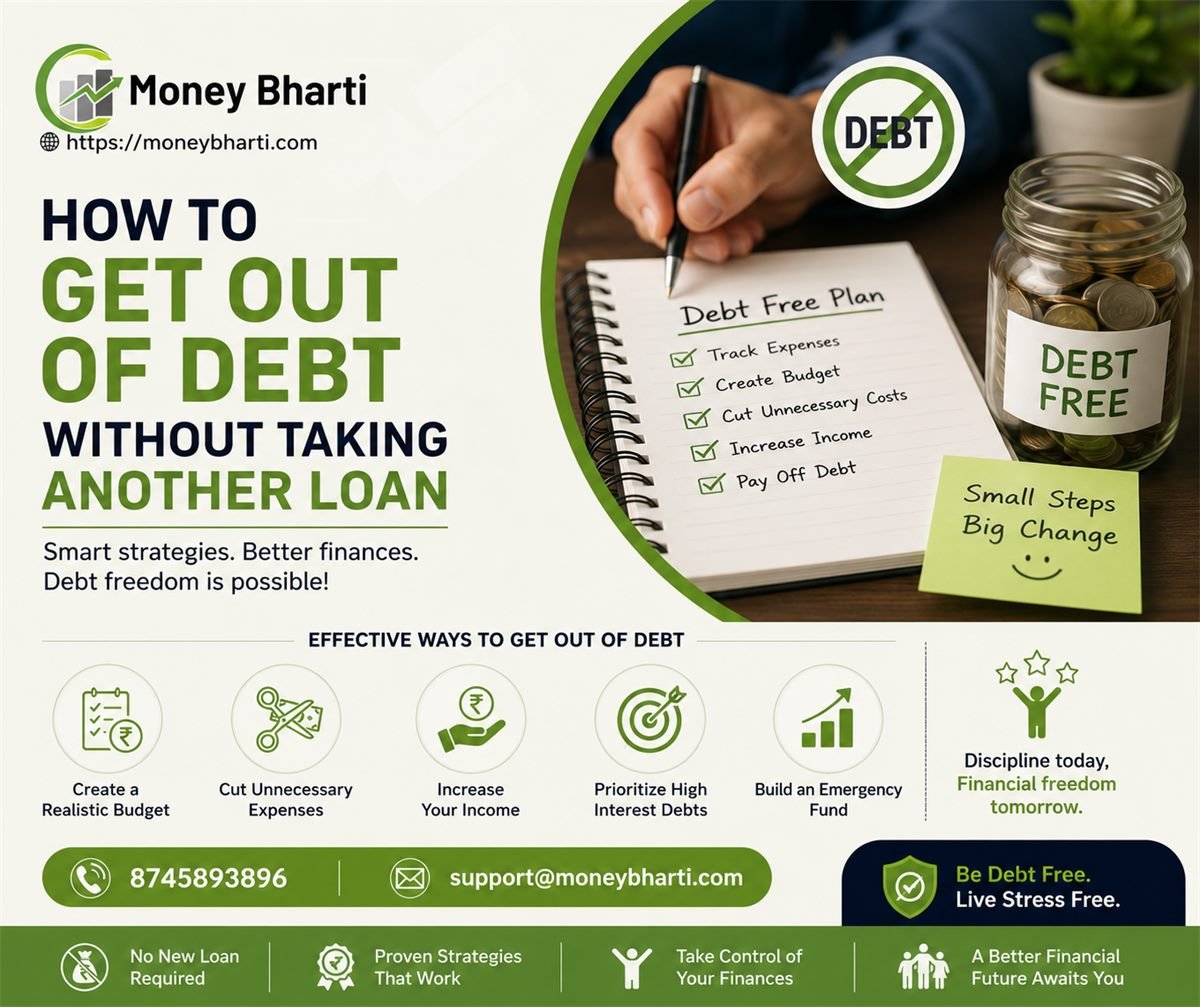
Here's the good part: becoming debt-free doesn't always mean borrowing more money. With the right repayment strategy, a bit of discipline, and better control over your monthly cash flow, most people can clear their existing debt without ever approaching a new lender.
This guide isn't just another list of definitions. It walks you through how to understand your actual situation, which strategy fits you best, and how to build a practical, step-by-step plan to become debt-free — without taking another loan.
A Quick Note Before We Start
This article is for general information only, not financial advice. Everyone's income, debt, and family situation is different. Please talk to your bank or a qualified financial advisor before making any major financial decision.
Why Taking Another Loan Isn't Always the Answer
When the EMI pressure builds up, taking a new personal loan can feel like the quickest way out. But most of the time, it doesn't actually solve the problem — it just pushes it further down the road. Here's why:
- More interest: A new loan means one more interest rate stacked on top of what you already owe, which raises your overall cost of borrowing.
- Longer repayment: Using one loan to pay off another usually stretches your total repayment timeline, keeping you tied to EMIs for years longer.
- More EMIs: Every new loan is another monthly commitment, which tightens your cash flow even further.
- Lower CIBIL score: Taking loans repeatedly and holding multiple active accounts at once can pull your credit score down.
- Financial stress: The impact of debt isn't just financial — it affects your peace of mind too. More loans usually means more stress, not less.
That's why this guide focuses on repayment strategies — ways to work with the debt you already have, rather than simply explaining new loan products.
Step 1: Understand Your Total Debt
The first real step toward becoming debt-free is knowing exactly how much you owe — to whom, at what rate, and by when. Most people never actually sit down and work this out, and that's usually where the confusion starts.
Grab a notebook or open a spreadsheet, and list every debt like this:
| Debt Type | Outstanding | Interest Rate | EMI | Remaining Tenure |
| Credit Card | ₹85,000 | 42% p.a. | Minimum Due | Revolving |
| Personal Loan | ₹2,50,000 | 15% p.a. | ₹7,200 | 3 Years |
| Consumer Loan | ₹35,000 | 18% p.a. | ₹2,300 | 14 Months |
This gives you the full picture — which debt is the most expensive, which one can be closed the fastest, and what your total monthly outgo actually looks like. This table becomes the foundation for every decision you make from here on.
🔍 Quick Self-Assessment: Where Do You Stand?
Answer these with a simple yes or no — it'll give you a sense of how serious your situation actually is.
- Do you only manage to pay the minimum due on your credit card, not the full amount?
- Do you currently have more than 2 active loans or cards?
- Is your total EMI more than 40% of your monthly income?
- Have you missed an EMI in the last 6 months?
- Are you thinking about taking a new loan just to repay an existing one?
- Do you have no emergency fund at all?
- Do you not know your exact total outstanding debt right now?
If you answered "yes" to 3 or more, the strategies below should help you a lot. If you answered "yes" to 5 or more, seriously consider seeking professional help.
Strategy 1: Debt Snowball Method
The Debt Snowball method is built around motivation. You pay off your smallest debt first, regardless of its interest rate.
How it works: List all your debts from smallest to largest outstanding amount. Keep paying the minimum on everything else, and put any extra money toward the smallest one. Once that's cleared, roll its EMI amount into the next-smallest debt — just like a snowball picking up size as it rolls.
Example:
- Loan A — ₹20,000
- Loan B — ₹70,000
- Loan C — ₹3,00,000
With this method, Loan A (₹20,000) gets closed first. That freed-up amount then goes toward Loan B, and finally toward Loan C.
| Advantages | Disadvantages |
| Quick wins build motivation early on | Not the most efficient method in terms of interest saved |
| Simple to understand and follow | High-interest debt can stay active longer |
| Emotionally satisfying — your list gets shorter fast | Total interest paid can end up slightly higher |
Who should use it: Anyone who needs motivation to stay on track, especially if you have several small debts that feel overwhelming. If seeing progress is what keeps you disciplined, Snowball is the one for you.
Strategy 2: Debt Avalanche Method
The Debt Avalanche method takes a different approach — you target the debt with the highest interest rate first, no matter how large or small the amount is.
Example:
- Credit Card — 42% interest
- Personal Loan — 15% interest
- Auto Loan — 10% interest
- Student Loan — 8% interest
Here, the credit card gets tackled first because it's the most expensive. Every rupee of extra payment goes toward it, while everything else continues to receive its minimum payment.
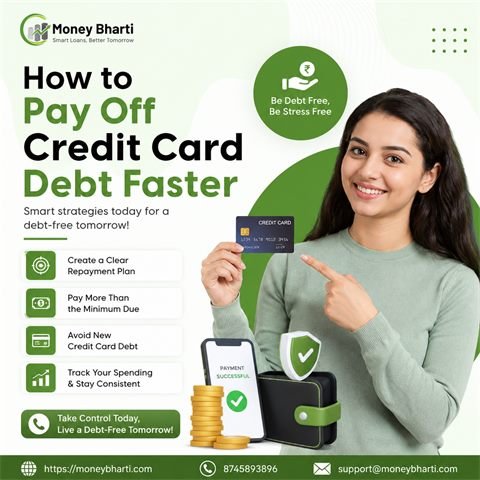
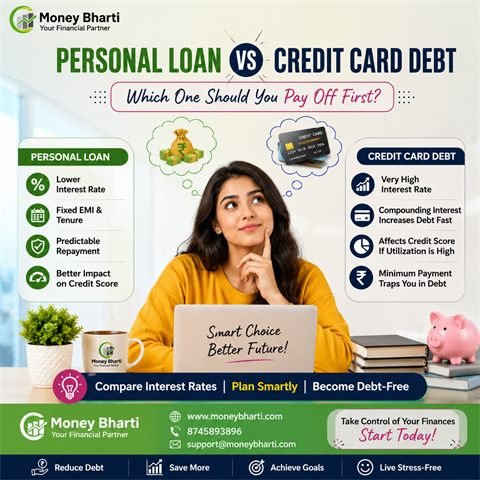
How much you can actually save: If a ₹85,000 credit card balance is sitting at 42% interest, paying just the minimum due can drag it on for years, with interest often overtaking the principal. Prioritising it first can save you thousands of rupees in interest compared to the Snowball method.
Snowball vs Avalanche: Which One Is Better
| Feature | Snowball | Avalanche |
| Focus | Smallest balance | Highest interest rate |
| Interest Saved | ❌ Less | ✅ More |
| Motivation | High — quick, visible results | Moderate — needs patience |
| Best For | Beginners who need motivation | Disciplined savers focused on the numbers |
Both methods work — the best one is simply the one you'll actually stick to. If you tend to lose motivation quickly, go with Snowball. If you're driven by numbers and want to save the maximum on interest, Avalanche is the better fit.
Strategy 3: Balance Transfer
Balance transfer mostly applies to credit card debt. It involves moving your existing outstanding to a new card or loan that offers a lower interest rate — sometimes even 0% for a limited period.
Benefits: Lower interest, sometimes a short interest-free window, and a single payment to manage instead of juggling multiple due dates.
Fees: Most balance transfer offers come with a processing fee, typically between 1% and 3% of the transferred amount.
Interest-free period: Many offers give you a 3 to 12-month window at low or zero interest — but if the full balance isn't cleared within that window, the remaining amount often reverts to a much higher rate.
Risks and common mistakes:
- The rate after the interest-free period can be steep if the balance isn't cleared in time
- Applying for a new card means a fresh credit inquiry, which can have a short-term impact on your score
- Continuing to spend on the old card without closing or limiting it can add to your debt instead of reducing it
Who should use it: People with a decent credit score who have a clear, short-term plan to pay off the full balance — not just an intention to keep making minimum payments.
Strategy 4: Debt Settlement
Debt settlement means negotiating with your lender to pay a smaller, agreed-upon portion of your total outstanding as a lump sum, with the rest written off. This is very different from repaying the full amount.
| Full Repayment | Debt Settlement |
| The entire outstanding amount is paid | Only a negotiated portion is paid |
| Credit report shows "Closed" | Credit report usually shows "Settled" |
| Minimal negative impact on CIBIL score | Significant negative impact, which can last for years |
Impact on CIBIL: A "Settled" status signals to future lenders that you didn't repay the full amount, which can make getting a new loan or credit card difficult for several years.
Pros: It offers immediate relief in genuine financial hardship and can reduce recovery calls or legal pressure.
Cons: It leaves a long-lasting mark on your credit score, and not every lender agrees to a settlement easily.
Cons: It leaves a long-lasting mark on your credit score, and not every lender agrees to a settlement easily.
Debt settlement should generally be treated as a last resort — used only when paying the full EMI genuinely isn't possible, and other strategies haven't worked.
Strategy 5: Debt Consolidation
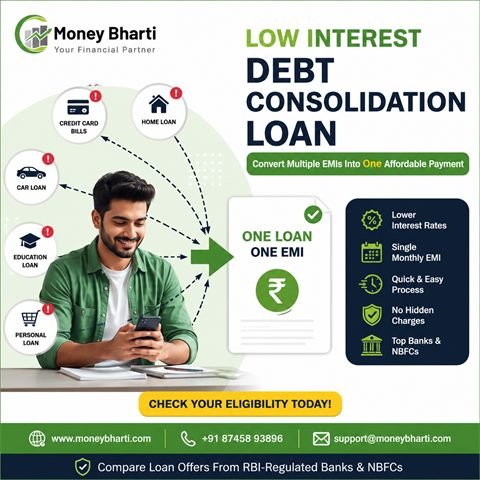
Debt consolidation involves combining multiple debts — credit cards, personal loans, consumer loans — into a single new loan, ideally at a lower interest rate.
Benefits:
- One single EMI instead of several scattered payments
- A personal loan rate is usually much lower than credit card interest (30-42%)
- Better monthly cash flow, since total outgo often drops
- Easier to track repayment — just one due date to remember
When Debt Consolidation Is NOT a Good Option:
- If your existing loans are already priced around 10-11% — consolidating could actually raise your average cost of borrowing
- If you're close to finishing off your current loans — a new processing fee rarely pays for itself at that stage
- If your income is unstable, making a new EMI commitment risky
- If your credit score is weak — you're unlikely to get a good rate, which reduces the whole point of consolidating
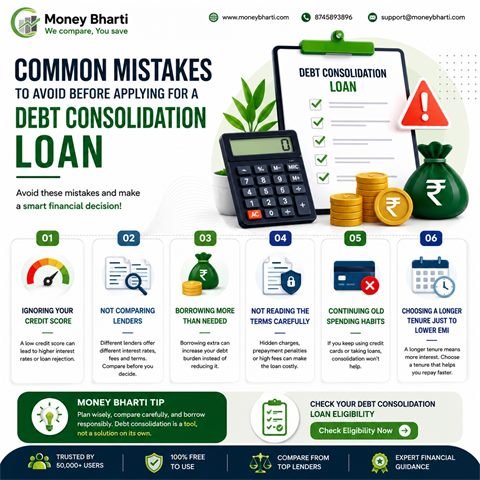
Worth remembering — technically, consolidation is still a new loan. It only makes sense when it's replacing your existing debt, not adding to it. If you want to explore this route, our debt consolidation loan guide covers it in detail, and debt consolidation loan vs personal loan explains exactly how the two differ.
How to Increase Your Monthly Cash Flow
Whichever repayment strategy you pick, progress stays slow if there's no extra money left over each month. Here are a few practical ideas most articles skip over:
- Cancel unused subscriptions: OTT platforms, gym memberships, or apps you barely open — review and cut them.
- Sell things you don't use: Old gadgets, furniture, or unused items can be sold on OLX or similar platforms for a decent lump sum.
- Freelancing or side income: Depending on your skills, taking on extra work in the evenings or on weekends can add real income.
- Weekend work: Any part-time or gig income earned this way can go straight toward debt repayment.
- Tax refund: Instead of spending it, put your tax refund toward your highest-interest debt.
- Bonus: Use a good portion of your Diwali or annual bonus to clear debt, not just to spend it entirely.
- Cashback and rewards: It may seem small, but cashback adds up meaningfully over a year if you consistently redirect it.
How to Negotiate With Your Bank
Very few borrowers realise they can talk to their lender directly. Banks generally want to avoid a full default, so there's often more room to negotiate than people expect — you just have to ask:
- Lower interest rate: With a good repayment history, a rate reduction is sometimes possible
- EMI restructuring: Extending the tenure to lower your EMI, if cash flow is tight
- Temporary payment relief: In cases of genuine hardship (job loss, medical emergency), some banks consider a temporary moratorium
- Waiver of charges: Late fees or penalty charges are sometimes waived, especially with a decent overall track record
This conversation can happen at a branch or through customer care. Nothing gets resolved if you don't ask — so don't hesitate to raise it.
Why a Small Emergency Fund Matters
This might sound counterintuitive — if you're already in debt, how does saving money make sense? But a small buffer is often exactly what stops you from taking a new loan in the first place.
If an unexpected expense comes up — medical, vehicle repair, an urgent home repair — and you have no savings at all, another credit card or loan often becomes the only option. And that's exactly where the cycle starts all over again.
Setting aside just ₹500 to ₹1,000 a month builds a small safety net within a few months. This fund doesn't need to be large — it just needs to be enough to stop an unexpected expense from turning into new debt.
Common Mistakes People Make
These are the mistakes seen most often during debt repayment:
| Mistake | Better Alternative |
| ❌ Taking another personal loan to repay an existing one | ✅ Tackle existing debt first using the Snowball or Avalanche method |
| ❌ Paying only the minimum due on credit cards | ✅ Pay as much extra as possible, beyond the minimum |
| ❌ Ignoring credit card interest | ✅ Prioritise high-interest debt first (the Avalanche approach) |
| ❌ Missing EMIs | ✅ Talk to your bank in advance if a payment looks difficult |
| ❌ Closing old credit cards unnecessarily | ✅ Keep them open (without using them) to preserve your credit history |
| ❌ Using new credit while repaying debt | ✅ Avoid new spending until your existing debt is under control |
90-Day Debt Reduction Action Plan
If you'd like a structured starting point, here's a simple 90-day plan to follow:
Week 1-2: Assessment
- List every debt — amount, rate, EMI, tenure
- Get a clear picture of your monthly income and expenses
- Complete the self-assessment quiz above
Week 3-4: Choose Your Strategy
- Pick either Snowball or Avalanche
- Decide a monthly target payment for each debt
- Explore balance transfer or consolidation if it genuinely fits your situation
Month 2: Execution
- Start following your chosen strategy consistently
- Activate extra income sources (freelancing, selling unused items)
- Begin building a small emergency fund (₹500-₹1,000/month)
Month 3: Review and Adjust
- Check your progress — how much debt has actually reduced
- Negotiate with your bank if needed (rate, tenure)
- Set fresh targets for the next 90 days
💡 Printable Debt Tracker
Copy this simple table each month to track your progress:
| Month | Total Outstanding | Amount Paid | Remaining Balance | Notes |
| Month 1 | ||||
| Month 2 | ||||
| Month 3 |
Which Strategy Is Right for You
| Situation | Recommended Strategy |
| Need motivation, want to see quick progress | Debt Snowball |
| Want to save the maximum on interest | Debt Avalanche |
| Credit card interest is very high | Balance Transfer |
| Genuinely severe financial hardship | Debt Settlement (last resort only) |
| Multiple EMIs, stable income | Debt Consolidation |
If consolidation seems like the right fit, you can check your exact numbers using our debt consolidation loan eligibility page, current interest rates, and the EMI calculator. Salaried professionals may also find our multiple EMI to single EMI loan guide useful.
An Illustrative Example: A Typical Indian Borrower's Journey
(This is an illustrative example only, not a real individual's case.)
Picture an IT professional with two credit cards (₹1,20,000 combined outstanding, at 38-40% interest) and a personal loan (₹2,00,000 at 16% interest). Their total monthly EMI and minimum-due payments together added up to roughly ₹22,000, eating up a large chunk of their income.
They chose the Avalanche method — targeting the highest-interest card first, generating extra income through freelancing, and getting a bank to waive certain charges on one card. Within 8 months, both cards were cleared, leaving just the personal loan, whose EMI was comfortably manageable on its own.
This example shows that the right strategy, combined with a bit of discipline, can make a real difference — without ever needing to take a new loan.
When to Seek Professional Help
Sometimes self-help strategies simply aren't enough. Watch for these signs that it's time to talk to a professional:
- Your total debt has grown larger than your annual income
- You're regularly missing EMIs or minimum due payments
- Recovery agents or legal notices have started coming in
- You genuinely don't know where to start
In situations like this, reach out to your bank's grievance or restructuring team, or consult a certified financial counsellor. Some banks and non-profit organisations also offer free debt counselling — it's worth exploring, and there's nothing to be embarrassed about. It's a smart step, not a weak one.
FAQs
Q1. Can I become debt-free without taking another loan?
Yes. Strategies like Snowball, Avalanche, balance transfer, or simply negotiating with your lender can help most people restructure their existing debt without borrowing more.
Yes. Strategies like Snowball, Avalanche, balance transfer, or simply negotiating with your lender can help most people restructure their existing debt without borrowing more.
Q2. Which repayment strategy saves the most money?
Generally the Debt Avalanche method, since it targets the highest-interest debt first, reducing your total interest cost.
Generally the Debt Avalanche method, since it targets the highest-interest debt first, reducing your total interest cost.
Q3. Is Debt Snowball better than Debt Avalanche?
It depends. Snowball is better for motivation, Avalanche is more efficient in terms of numbers. The best method is the one you can actually stick with consistently.
It depends. Snowball is better for motivation, Avalanche is more efficient in terms of numbers. The best method is the one you can actually stick with consistently.
Q4. Does debt settlement hurt my CIBIL score?
Yes, settlement usually has a negative impact on your credit report, since the full amount wasn't repaid. This can make future loans harder to get.
Yes, settlement usually has a negative impact on your credit report, since the full amount wasn't repaid. This can make future loans harder to get.
Q5. Is balance transfer available for all credit cards?
No, this depends on the card issuer and your credit profile. Not every card or applicant qualifies for this offer.
No, this depends on the card issuer and your credit profile. Not every card or applicant qualifies for this offer.
Q6. Is debt consolidation always a good idea?
No. If your existing loans are already at a low rate, or you're about to finish paying them off anyway, consolidation may not help.
No. If your existing loans are already at a low rate, or you're about to finish paying them off anyway, consolidation may not help.
Q7. Can I negotiate with my lender?
Yes, many banks consider rate reduction, EMI restructuring, or temporary relief, especially in cases of genuine hardship.
Yes, many banks consider rate reduction, EMI restructuring, or temporary relief, especially in cases of genuine hardship.
Q8. Should I close my credit cards after repaying them?
Not necessarily. Keeping old cards open (without using them) helps maintain a longer credit history, which is good for your score.
Not necessarily. Keeping old cards open (without using them) helps maintain a longer credit history, which is good for your score.
Q9. How long does it take to become debt-free?
This depends on your total debt, income, and how much extra you can pay each month — anywhere from 6-12 months for some people, to 2-3 years for others.
This depends on your total debt, income, and how much extra you can pay each month — anywhere from 6-12 months for some people, to 2-3 years for others.
Q10. Can budgeting alone help me repay debt?
For smaller debts, yes — disciplined budgeting can be enough. For larger or high-interest debts, a structured strategy like Snowball or Avalanche tends to work better.
For smaller debts, yes — disciplined budgeting can be enough. For larger or high-interest debts, a structured strategy like Snowball or Avalanche tends to work better.
Q11. What's the difference between debt settlement and full repayment?
Full repayment means paying the entire outstanding amount; settlement means paying only a negotiated portion, with the rest written off — but the credit score impact is much bigger with settlement.
Full repayment means paying the entire outstanding amount; settlement means paying only a negotiated portion, with the rest written off — but the credit score impact is much bigger with settlement.
Q12. Do I need an emergency fund if I'm already in debt?
Yes, even a small fund significantly reduces the chances of needing a new loan when an unexpected expense comes up.
Yes, even a small fund significantly reduces the chances of needing a new loan when an unexpected expense comes up.
Final Thoughts
There's no single "perfect" way to get out of debt that works for everyone. The right strategy depends on your income, the type of debt you have, interest rates, and your personal discipline. Before taking another loan, it's worth pausing to ask — could Debt Snowball, Debt Avalanche, Balance Transfer, or a simple conversation with your bank help you clear your existing debt more efficiently instead?
If, after considering all of this, a structured consolidation loan still feels like the right option for you, start with our debt consolidation loan guide and check your eligibility.
Related Guides
- Debt Consolidation Loan
- Debt Consolidation Loan vs Personal Loan
- Debt Consolidation Interest Rates
- Debt Consolidation Eligibility
- Multiple EMI to Single EMI Loan
- Debt Consolidation EMI Calculator
Responsible Borrowing Note
The examples and numbers used in this article are illustrative only, not real data. Please consult your bank or a qualified financial advisor before making decisions based on your actual financial situation. MoneyBharti is not a lender, and this content is meant purely for general awareness.